Committing to Nonviolence

In recent weeks, the conduct of federal immigration agents has unleashed a shocking level of violence upon this country. It is opening fissures in our nation’s psyche that will not be repaired at the speed of the changing news cycles. This violence threatens our social order in a way that harms all of us, regardless of our politics.

Unearthing the capacity for hate and harm that lies within human nature, and within each of us, is deadly for any society. It undermines any other values we claim to hold. Our collective life depends on maintaining clear boundaries for how we behave, establishing consistent means to contain and stop violence without escalating it.

Responsible law enforcement exemplifies this understanding. Effective officers perform their duties in a way that respects the dignity of those in the communities they serve. They bring professionalism and training to decreasing tensions that arise in human interactions. They use force responsibly and are accountable for their actions. This is the kind of law enforcement that makes communities safer, and earns the trust and respect of the people they serve.

The untrained federal agents roaming American cities are functioning entirely differently. We see them acting without civility, despising and dehumanizing those they encounter. They lack professionalism as they act out violent impulses without accountability.

Allowing this is harmful and traumatizing, and the injury extends beyond the obvious wounding or death of those who are directly victimized. It harms the perpetrators themselves, solidifying their worst impulses as the lack of professional guidance and accountability allows them to rely on their own base instincts. It is devastating to the witnesses, and to all who claim this nation as home, when hateful acts are perpetrated in the name of the government.

In such an environment, individuals without a strong moral center become pulled into a dark vortex of violence, whether in thought or deed. Those in support of the administration become convinced that this kind of violence is necessary. In their approval, they clear the way for the latent violence in their own psyche to surface. Those outraged by this violence must contend with a level of anger and pain that stirs destructive impulses latent within their own psyche as well. Some individuals have the inner strength to contain such forces; many do not. Especially for those most susceptible, the images of unchecked violence invite a growing darkness to take hold.

Long, dark eras of violence and suffering have taught humanity what is at stake in the question of whether we can hold the bounds of civilized society. Undisciplined, unchecked, violent power unleashes a force that will not be contained or controlled. It cannot be tethered by a political position or constrained by a particular leader. It unmakes the social order on which any nation is built.

We must hold our representatives in Washington accountable for stopping this chaos. At the same time, it is imperative that we examine the nature of our effort and the tone of our demands. It has never been more important to see our own motivations clearly. Wise and effective action depends on clarity of perception and thought. Stopping violence must first be anchored to a commitment each of us makes within ourselves as an individual.

Nonviolent resistance builds a stronger, civilized society. Violence threatens it. From leaders such as Gandhi and Martin Luther King, we know what nonviolent protest looks like. It requires discipline, commitment, and creativity. Thoughtlessness grants the dark power of violence a path to expression.

Civil society, much less a culture in which humanity flourishes, depends on refusing violence. We must cultivate nonviolence within ourselves, and demand the same from our leaders. We can only have a civil society if we work together to guard, preserve, and enforce it.  

Susan Christerson Brown

Led by Light

I like the way the threshold of the new year falls midway on the arc between Christmas and Epiphany. With the bustle of Christmas preparations accomplished, there’s a set-apart nature to these days before the world takes up its usual pace again.

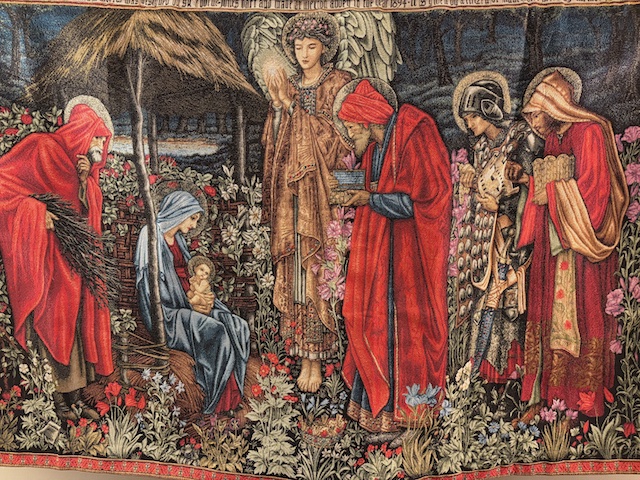
There’s a tapestry that echoes this sense of transition and bridges this turning of the year. It’s an image of divinity born into the world, which is honored by those with the wisdom to see. It reminds me that the divine indwelling we’ve just celebrated at Christmas is what carries us forward into the unfolding of the new year.

Adoration of the Magi is a William Morris tapestry that took years to complete. It depicts the light that leads us to the heart of our lives, and the hush of the encounter we find there. The model for the tapestry was painted by British artist Edward Burne-Jones. A friend pointed out that he was part of the pre-Raphaelite Brotherhood, a movement of artists reaching back toward a medieval aesthetic they experienced as closer to the Source.

The tapestry took almost four years to weave. It was commissioned by the Rector of Exeter College in Oxford, England, who did not live to see its completion. The piece was to hang among stained glass windows, and thus incorporated vibrant color in order to hold its own in that setting. It was completed and installed in 1890.

In the center, an angel uses two hands to hold aloft a source of light. On one side, Mary is seated holding the baby with Joseph standing behind. On the other side, the magi approach the holy family with their gifts.

The light high in the center is what sent me searching out the source of an image I encountered briefly last year. The skillful and beautiful rendition of light held me riveted. Christmas is all about light, and I was glad to find a reproduction of the tapestry to display for the holidays.

This piece of art, like most everything we create, blooms from a long series of artistic expressions offered over millennia. The color and scale of the masterfully woven original tapestry was informed by the work of architects and stained-glass artists. The light conveyed on the tapestry is a study of the painting by Edward Burne-Jones rendered into tactile form. His original work on canvas is elevated by a long history of artistic explorations of light and form, and it visually conveys the story that unfolds in the written words of scripture. That story in turn is translated from the ancient language of a time and place far away, by writers who make it accessible to their own culture. In every iteration, artists keep meaning and beauty alive in a new form, shining its light into their own time.

There’s more to learn about this tapestry, particularly about the symbolism of the various plants in the background. Each would have had its own associations and metaphorical meaning. The work is perceived by the mind along with the heart, with a presence that resonates in the body as well.

When we connect with art it kindles new experiences and new realities. Creation happens anew. We carry the light into an ever-new context, even as the light leads our way.

Susan Christerson Brown

Living the Difference Between Power and Agency

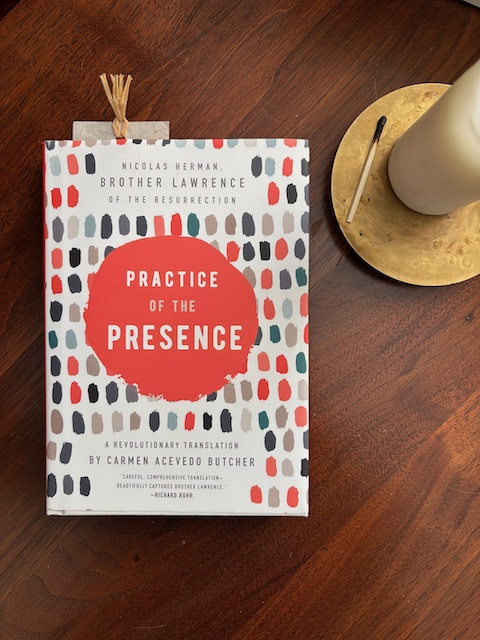
Over the past few weeks my Mystics Reading Group has been discussing Brother Lawrence of the Resurrection’s Practice of the Presence. Brought to new life by Carmen Acevedo Butcher’s recent translation, Brother Lawrence has become my teacher.

Brother Lawrence lived in 17th century France. He took monastic vows after serving as a soldier in Europe’s horrific Thirty Years War, in which he suffered emotional trauma along with a leg wound that never healed.

Life had shown him how little control he had over his circumstances. His duties in the monastery were hard work and he learned to rely on God’s help to get through the day. As 12-step spirituality teaches today, Brother Lawrence recognized that he was powerless to make his life ok.

Neither did he have to power to change the harsh political and economic realities of his time. He had seen human beings’ capacity for violence and cruelty; new instances of injustice did not shock him. Rather, he was surprised that the state of the world wasn’t worse. He prayed for the perpetrators and left the task of changing them to God.

What a counter-cultural approach! Embracing powerlessness is anathema in our culture. Experience argues that if the good guys don’t try to wield some kind of power then the bad guys win; if we want to make a difference we have to be in the arena; we have a responsibility to engage in the struggle. And if we don’t have the power to actually change things, we can at least harness our anger and name what needs to be changed.

If we believe this, then what good does it do to simply live a more peaceful, joyful, and loving life? How does an individual’s state of mind, or state of grace, make any difference to the pressing questions of the day? How does one simple monk far from the rooms where power is negotiated, or the fields where power is taken by force, affect anything?

Yet almost 400 years later, it is Brother Lawrence’s words we’re reading. The wars and the fortunes of his time came to an end, but his teachings remain. His example of not resisting the things imposed on him, while trusting that Love would sustain him through it, is like the discovery of a rejuvenating spring of water available for us to drink.

In the midst of hardship, he found a Source of divine love unfailingly accessible within his own being. And as he practiced remembering and reconnecting with this Presence throughout the day, he found himself bolstered by a flow of love and power beyond anything of his making. Life became joyful, filled with meaning, beauty, and love.

As Brother Lawrence became grounded in Love, he made peace with all that he could not control. His circumstances no longer had power over him. Yet he was anything but passive. His practice of Presence set him free to act from a place of greater wisdom. When he stopped trying to control or resist what he was powerless to change, he unleashed the transformational nature of his own agency.

We generally don’t want to consider how little power we have, whether it’s over our personal lives or over the national and global realities reported in the news. We torment ourselves over how to play a part in the power struggles of our time. All the while, our engagement with issues of power distracts us from recognizing our unlimited agency.

We can decide where our attention and energy will go. We can seek the highest use of the unlimited agency that we do have, and discern the most life-giving use of our limited ability to act. And in making these choices we can be guided by the inner light that is our inheritance.

I’m not strong enough, smart enough, well-connected or well-informed enough, to know how to fix what’s wrong with the world. But if I’m open to it, I’m shown the next thing I need to know and the next thing I need to do. It shows up as something new, something I didn’t think up, something I didn’t know before.

I want to live out of this balance of humility and responsibility, seeing clearly the scope and limits of my power, along with the best use of my agency. I want to let go of wasting my energy on what I cannot change, while being open to guidance about what is mine to do.

May we all apply what Brother Lawrence teaches about the Practice of the Presence. May we bring light into our place in the world, with the courage to receive what Wisdom shows us, and the strength to act upon it.

Susan Christerson Brown

Letting Go of Outrage

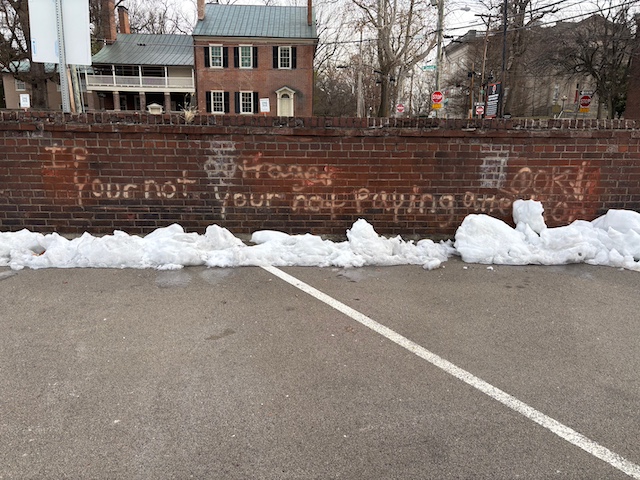
On Sunday morning I photographed this line of graffiti, painted along a long, low brick wall: If you’re not outraged, you’re not paying attention. Along with the directive: LOOK

I could feel the anger and frustration behind the words, the desire to pierce the bubble of those who are comfortable and complacent. It’s a sentence, written at the scale of whole-arm movement behind a can of spray paint, with the power to hook me.

I don’t want to be guilty of not paying attention. Attention matters. And attending to what matters is a moral duty. Closing ourselves off from the world is not what we’re here for. Yet neither are we here to live in a state of outrage. It exhausts us, while serving no good purpose.

How can we pay attention, yet not live in a continual state of outrage?

It helps to notice that eliciting outrage is often a form of manipulation. Those who want our outrage want to control our attention and our energy.  

One form of this manipulation is through taking action that provokes outrage. This is a way of both directing and thwarting our attention, like a magician gesturing grandly with one hand while performing a sleight-of-hand with the other. To understand what’s really going on, it’s important to look at more than what is being overtly presented.

Another kind of manipulation is using outrage to gather a following and fuel a movement. This kind of manipulation is more subtle. It uses righteous indignation, which can seem like the high moral ground. This is tricky territory, because the flare of anger can indeed bring with it energy for important action. Anger brings with it information about a line that has been crossed, and the energy to respond—hopefully with clarity and respect for life. Anger in itself, when it moves through and moves on, is not a problem.

Remaining in a state of outrage, however, steeps us in a toxic brew. It limits how we see the world; it impedes the growth of creative solutions to problems. Overtaken by outrage, we lose the ability to discern when our efforts are no longer effective. Living from a place of outrage turns the world into a battlefront that gives life to no one. It cuts us off from the source of life, and from one another, as we rely only on our own rapidly depleting resources. We become brittle, like the dying branch of a tree.

When we can pay attention and respond from a place not rooted in anger, but in the fertile soil of wisdom, then we have something to offer that actually makes the world better. When we can set aside our own reactivity, and allow our actions to be led by what is highest and best within us, we have a chance to bring healing to ourselves and others. We can only do this if we can consciously choose where to place our attention.

Where there is life there is hope. The brittle branch may yet show a green bud in the spring. Our rough bark can still hold the life force that unfurls a new leaf.

What new life might we be a conduit for?

Susan Christerson Brown

Circles of Friends and the Cloud of Witnesses

Friends have always mattered, but I’m particularly aware of how important they are right now.  When the outer world is in upheaval, stirring up fear and anxiety within, the people whom we love and trust help steady us with their presence. Wise friends make it easier to calm the distracting agitation, hear the inner voice of wisdom, and act in a way that truly serves life.

A few days ago in the company of a trusted friend, I found myself releasing tears that I didn’t even know were there. I had no idea of the weight I carried until the shelter of our friendship allowed me to feel safe enough to acknowledge it. Feeling loved allows us to open our tender hearts. Each of us is carrying more than we know. Recognizing the state we’re in is how we release the burden of our human woundedness into the healing light.

Being aware of our inner state also helps us recognize both positive and negative aspects of ourselves, and to make decisions informed by what is best in us. It helps us recognize the difference between being manipulated and being informed. It allows us to know when our actions come from a place of clarity and wisdom, and when we’re being driven by destructive emotions and blinded by a too-narrow focus.

Outrage and judgment, grief and despair, are natural human emotions arising in many of us in response to the kind of leader this country has chosen to elevate. It’s important to make space in ourselves for these genuine emotions, and it is also important not to cling to them. We can allow emotion to move through us without our being consumed by it.

This is important, because however appropriate these emotional states may feel, they cannot sustain us. Neither can the agitation of an anxious mind, with its anticipation of doom and plans for catastrophe. We need a more steady source of fuel that does not burn us out. We need a connection to the quiet center within. The onslaught of analysis and outrage distracts us from connecting to the deeper wisdom that lets us know the next right step that is ours to take.

Many of us feel dismay at the prospect of dismantled safeguards and deconstructed institutions that may occur in the coming months. Nonetheless, the values that gave rise to those structures remain. Values such as education, justice, civility, and kindness are strengthened and preserved in the lived experience of individual people. We have the power to guard them at the micro-local level where we live our lives.

We all have a choice in where to place our attention and energy. I have limited ability to effect change at the national level, which is the focus of most news reporting. There are others in a better position than I to navigate those political waters; perhaps I can find ways to support them. Yet I do have agency. I trust that each of us has important work to do right where we are. In fact, that is the only place where we can work.

The fabric of American society is strained. Small tears are visible in many places. Our enemies exult in this. Finding what is ours to do, individually and in small groups, will yield actions that bring a new fiber into the weave of the beloved and vital fabric of our country. This new fiber, and the ways we find to thread it through the material of American life, will be created from a clear-eyed perception and response to the context of our everyday lives. It will be informed by the Source of life moving through us, grounding us in the ability to really see what is happening, surprising us with new possibilities, and supporting the day-by-day work of holding the fabric together. This fiber may be neither red nor blue. Part of the work involves recognizing that there is much more to a person than how they voted in the election. This, too, is something our enemies want us to deny.

We can’t know exactly what will happen in the coming months, much less years, and we waste our precious energy flinging ourselves at imagined outcomes. Our strength is needed for being present to whatever each moment requires of us. Our energy is needed for guarding our values. Our attention is needed for seeing others in their full humanity, remembering that our entire society is strengthened when we honor and guard the dignity of each individual. People are more complex than any one aspect of their lives.

And in the meantime, it is not only wise but glorious to take sustenance from this life, in the company of those we love, and sustained by the beauty of the natural world. We can be uplifted by those around us, and inspired by the words and the lives of those who have gone before us. There is a great cloud of witnesses who have shown us how to keep the faith. They are whispering, “Do not be afraid.”

Susan Christerson Brown

Unclenching

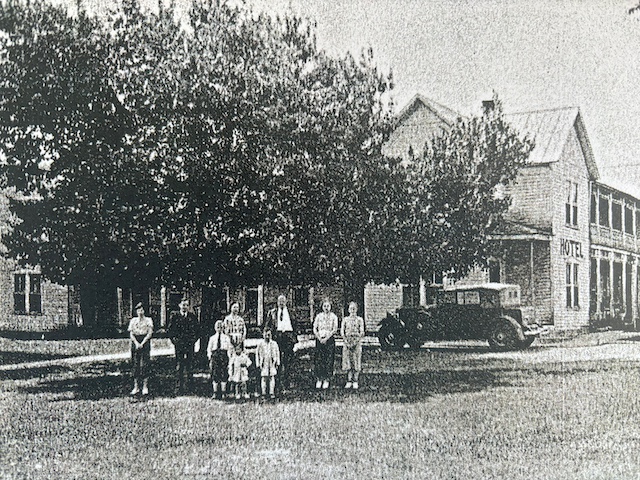
A hundred-plus years ago, my ancestors owned and operated a mineral springs spa in Kentucky. People came in search of rest and healing, and reported countless stories of renewed health and vigor resulting from their stay. My family knew how to welcome and care for their guests, and worked hard to create a place that was a balm for body and soul.

During election season, visits from politicians were banned from the spa. In July of 1925, a notice that politicians would be turned away from the property was published in the newspaper. The local paper was the primary source of news back then, but even without today’s electronically charged media environment, politics at the time were divisive and political discussions heated. 

My great-grandparents knew that the agitation stirred by political speeches, or even the presence of local politicians during election season, worked against the healing effect of their spa. They protected their guests, their business, and the unique value of what they could offer, by holding firm boundaries in a politically charged environment. This was yet another way they gave their patrons rest and helped restore their health.

Today, most of us are weary of this campaign and anxious about the election’s outcome. Polls tells us that supporters of both candidates feel that everything is on the line, that a loss will throw the country into crisis. Fear, hate (which is largely driven by fear), and the dehumanization of the opposition distort our view of one another. We can’t see clearly, think rationally, or respond effectively when our perception has been hijacked by these overwhelming emotional forces.

When we’re possessed by the power of these ancient archetypal energies, they drive our actions. We lose the ability to clearly perceive what’s really happening, and to effectively choose how to respond. Our instinctive survival modes take over: Fight, Flight, or Freeze. At that point, we become prone to manipulation.

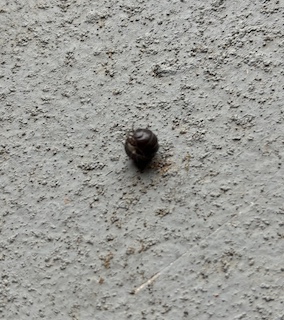
I had all of this on my mind a few days ago when I saw a roly-poly bug on the porch. It reminded me of my childhood, when a roly-poly, or pill bug, could fascinate me on a timeless afternoon. How predictable it was, curling into a tight roll when I touched it, so that I could tumble it across the carport like a little ball.

I would watch for it to unclench, sometimes impatient with it for taking so long. I waited to see it expose the soft, flat underside of its grey oval body just long enough for the tiny filaments of its waving legs to find the ground again, the rounded shield of its back turned up once more, protecting it as it moved through the world. Its legs would carry it over any surface, but not when it was afraid. Curled up tight, in survival mode, it was as if the roly-poly were no longer a living thing. I was willing to watch for a long time, because it was a relief to see it uncurl and be on its way again under its own power.

It’s hard to make good decisions when we’re afraid. Our automatic responses to danger take over; the instincts patterned in our bodies drive us into survival mode. We easily lose connection to the quiet center, the still small voice, the source of wisdom and guidance.

When our country was divided on invading Iraq many years ago, it was the story of weapons of mass destruction allegedly hidden there that tipped the balance in this country. I for one gave up my opposition and acquiesced to the invasion, conceding that this military action must be necessary to keep the world safe. I believed the officials who painted a terrifying picture and presented themselves as the shield and defense that would protect us all.

In that fearful time, I became as predictable as a roly-poly. I was easily rolled into the corner of supporting, even if reluctantly, that invasion. Later we learned that those officials said whatever they needed to say to make this country align with the invasion they wanted. The reports of weapons of mass destruction were not credible, but by the time we learned that it was too late.

Fear, and the hate that it often undergirds, makes us more readily manipulated. When someone tries to make us afraid, it’s a good time to guard the connection to our own center. To give in to fear is to give up our own agency. It’s good to ask, in this moment, “Is my physical survival really in peril?” And if in this moment my life is not in immediate danger, then how can I unclench, get my feet on the ground, and move in the direction shown by the life-giving wisdom within?

Giving ourselves time away from the onslaught of the news is a good start for unclenching and reconnecting to the divine light shining within our own center. We can find a way to create for ourselves some inner version of a healing spa away from the political noise, even if it’s only for a few minutes a day. We need a quiet space to cultivate health and wholeness, restore our strength, and get our feet on solid ground.

Then we can return to the world with the clarity to see other people in their full humanity. We can cultivate the ability to keep our balance and not be manipulated. We can cultivate the love that transcends fear and hate. We can take action responsibly, claiming the agency to convey some bit of light into the darkness.

I have a photo of my young grandson when he was about five years old, kneeling beside a narrow garden bed alongside the garage at his old house. He’s wearing his purple baseball cap, a teal t-shirt, grey denim pants, and dark blue sneakers. Just past him a bright red tulip is open to the sun. His hands are loosely clasped at his knees and he’s leaning forward, a pleasant expectant look on his face, as he focuses on a purple hyacinth sitting low on the ground before him.

I want a world, a country, a culture, deserving of this child of my heart. Where the dignity and worth of each person is honored. Where we can somehow find a shared reverence for the value of life and of each other. And where we can regain attunement to what is ultimately true, acting out of the better angels of our nature.

Susan Christerson Brown

The Fragrance that Draws Us In

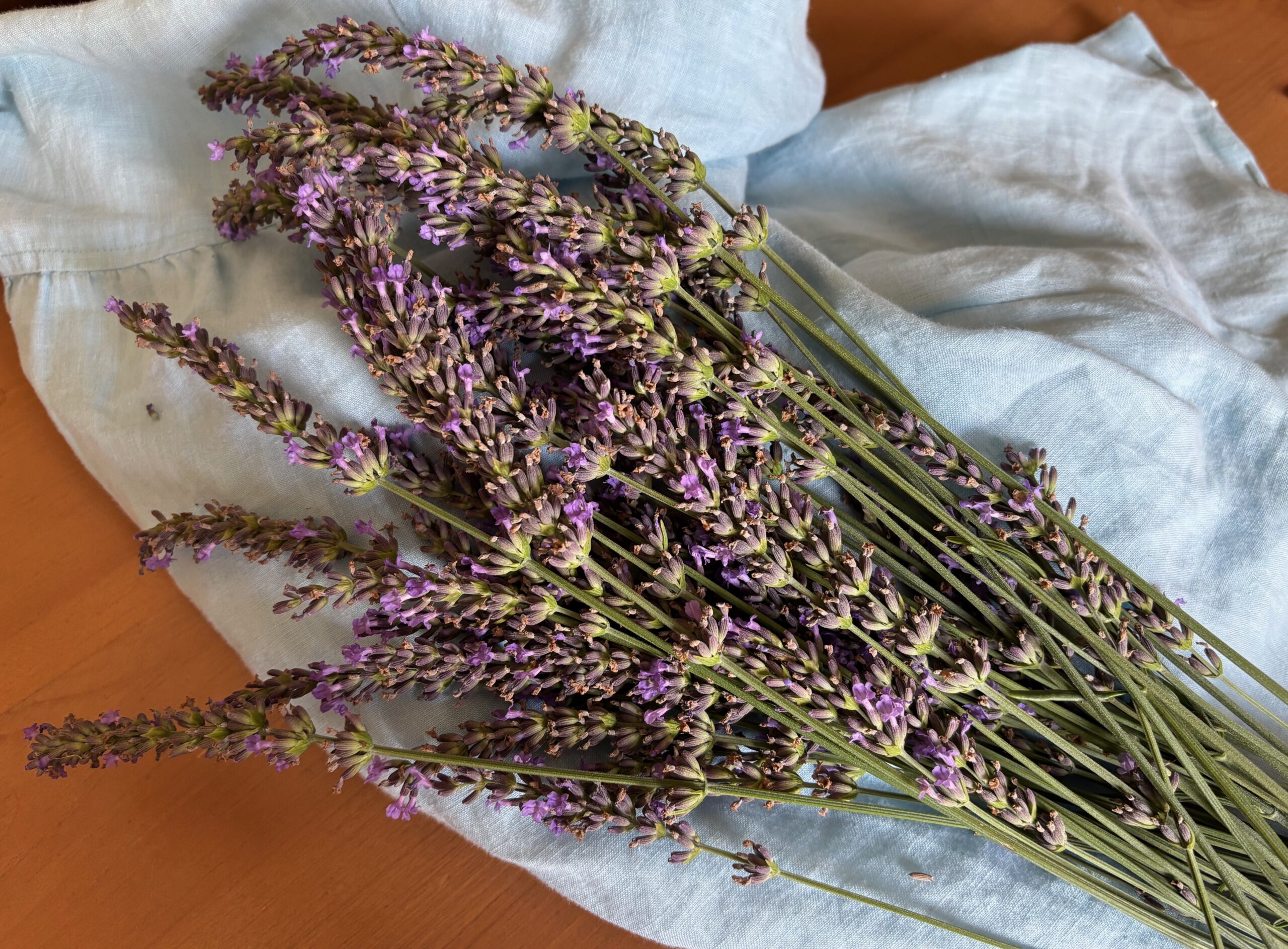
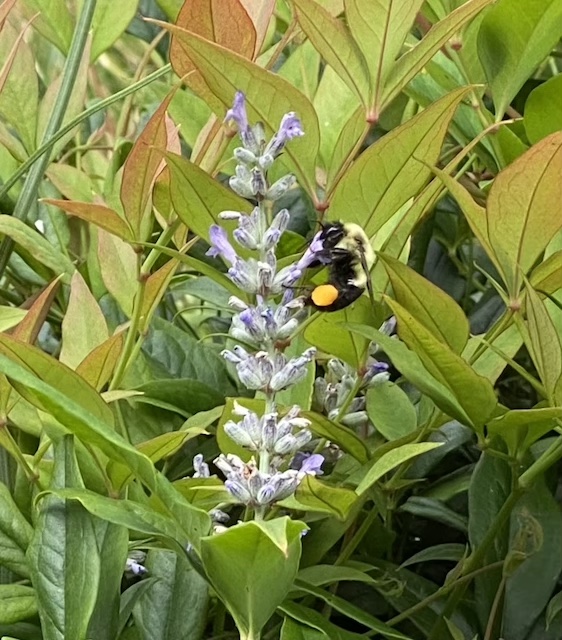
The largest lavender plant I’ve ever seen is blooming beside my front porch this summer. Most of my mature plants are about ten inches tall. But this year one of them shot out stalks three or four feet long in every direction, like a botanical version of spherical fireworks. Each is tipped by a slender cone of buds opening into tiny purple flowers.

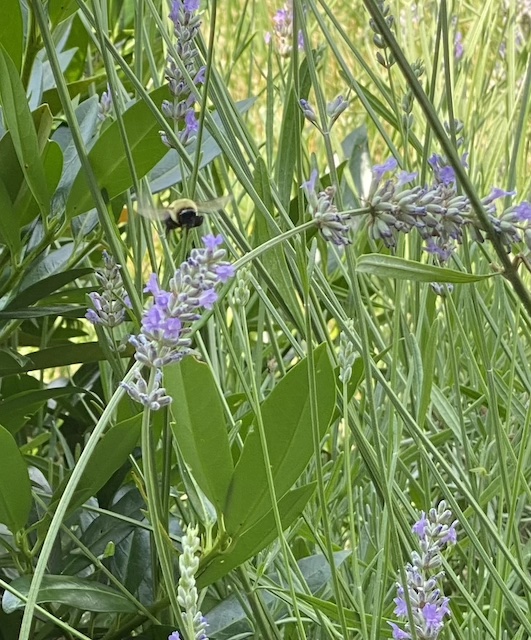
From early morning until twilight the blossoms attract bumblebees. They land heavily, bouncing at the ends of the long stalks like reverse bungee jumpers. The bees tolerate the thrill ride for the sake of lavender pollen and nectar, precious food for a nest located somewhere over the roof and beyond. Today, one of the bees is weighted with two full pollen baskets. They look like little orange balls attached to the bee’s hind legs—nature’s original cargo pants. It’s almost always four bees—for days, even weeks now, four bees at a time bobbing among the lavender stalks. The same four? I wonder.

Bumblebee with a full pollen sack

I enjoy taking my morning coffee onto the porch, breathing the scent of lavender and observing the bees sampling bloom after bloom. In recent days I’ve watched them with a grieving friend on my mind. I wish I could make life into something that holds the sense of the purpose and beauty and peace of this small garden spot. My friend knows suffering, from long years of heartache and loss as mental illness and addiction claimed this child she loved. Even so, the death her child, of anyone’s child, at any age, is too much, whatever the circumstances. The heartbreak this world contains is terrible.

I have so little to offer her, but decide I could cut some of these enormous stalks to make a generous lavender wand, weaving prayers along with the ribbons and stems. As I work, the scent of lavender wafts not only from the flowers, but leaves and stems as well. The lavender-scented air fills my breath and my thoughts; I imagine the pleasure taken by the bees in simply navigating by this perfume.

We’re all following the fragrance that draws us in. We are compelled by what attracts us, and by what we believe we need. The natural instincts of the bees lead them to the life-giving nectar and nourishment of a flower on a swaying stem. The instincts of the human psyche are rarely so simple and pure. What we cling to and what we resist often distort our sense of what we must have. Recognizing the fragrance of what is truly life-giving, and following it to the source, is the work of a lifetime.

What can we learn from the bees? They bury themselves in the blossoms for a moment then move on, their transitory bliss part of a larger pattern. They take their fill and buzz off toward the nest, returning from their explorations with something of value. They never forget that they’re part of a larger colony. They follow the scent of the flowers, and still they remember how to find their way home.

We humans have the freedom to choose what to put in our pollen baskets. If our choices are to be life-giving, we need discernment and sometimes help. Through some mysterious interplay of strength and humility, discipline and grace, we generally learn to delight in what brings life. Through wisdom we come to know our place in the larger pattern of things. Through the leading of the heart we learn to navigate by love. And I trust that even when we leave these gifts unopened, the greater love holding all of us will find a way to carry us home.

Susan Christerson Brown

Tending the Soil of the Psyche

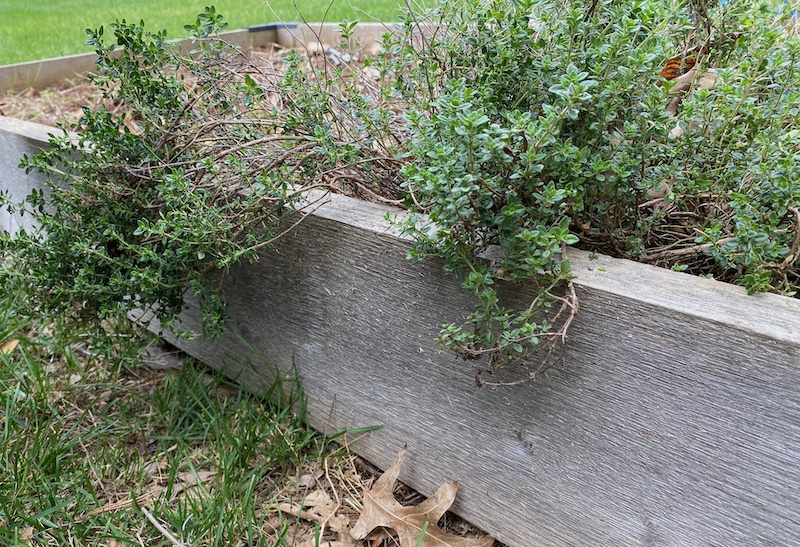
This week I cleaned up the garden bed, neglected since last fall when I managed only to stack the tomato cages and drag away the spent vines. The winter’s brief deep freeze took the rosemary, leaving a dry and brittle carcass to dig out of the ground. The newly green thyme and mint looked healthy, and I was careful to work around it. I pulled fragrant wild onion, hoed up violets and clover, raked out and removed grasses and vines. With an entire bed of turned soil exposed to the sun, a new wave of weedlings will no doubt sprout soon.

It can be a pleasure to work in the spring garden, but something cast a shadow over that effort. Even as I was accomplishing what needed to be done, I noticed the familiar voice of my inner critic. The critic didn’t give me credit for the work I was doing. Instead, it kept pointing out that I should have accomplished this task months ago.

Just like the untended garden bed, the soil of my psyche yields its own unwelcome perennials. There is always an interior voice, critical and judgmental, that insists I should do more and be better. I’ve learned that what needs tending, just like a garden bed, is my inner landscape with its unrelenting inner critic. That’s who was judging me for being late to the task.

That inner critic would easily drain all the joy and satisfaction out of accomplishing the job, if I allowed it. The inner critic has no capacity to enjoy the day or to celebrate what has been completed. It can see only that the work should have been done already, and that there is more to do. In matters large and small, the critical inner voice is capable of acknowledging only the ways we fall short.

If we’re fortunate, at some point we realize that the inner critic does not know how to embrace life. It insists we work harder to be good enough, but never allows us to claim that blessed state. The demands of the inner critic are discouraging, not life-giving. It’s not helpful to chastise myself even as I’m working on what needs tending—whether it’s my garden or my life. If that’s how it has to be, no wonder I put off getting started.

There is much left to do in the yard, chores that might have been done a month ago if I had spent more time at home or worked a little harder when I was. But I want my work outdoors in the Kentucky springtime to be a pleasure as I pull weeds and set new plants. To have any chance of enjoying the garden, I need to be ready for that critical voice.

I’ll probably never be rid of it, but I don’t have to let that voice take charge. I can invite the inner critic to sit on the ground next to me. After all, she truly believes that she’s helping me to be good, to be worthy, to be safe from the criticism of others, and deserving of a place to belong. She believes it’s all up to her to see that I earn my place in the world. She has helped me to accomplish many things, but she can’t take in the beauty of life just as it is. She can’t experience love because she’s so busy trying to be worthy of it.

Whether tending a garden or tending the soul, it’s necessary to pay attention to what’s coming up. Weeding and cultivating both our inner and outer lives teaches us about ourselves and about the world. It creates a space where goodness can grow and flourish. It brings healing and abundance, allowing us to live more fully and become more whole.

As we learn to pay attention in this way, we begin to see more clearly. We’re better able to respond with what is needed. Of course, this takes time. It happens slowly as our lives unfold. It doesn’t mean we’re late. There is nothing to be gained from berating ourselves for not having come to it sooner.

Jesus offered a parable (Matthew 20:1-16) in which the workers who showed up to the vineyard late in the day were paid the same as those who had labored since morning. The same pay, whether for eight hours or for one? It doesn’t make sense. The part of me that tries hard to do right and wants the reward I’ve earned stands with those in the story who worked all day. “That’s not fair!” they protest, and I see their point.

But the point of the story is not that we are hard workers being taken advantage of. Rather, we are the ones showing up late in the day. It takes most of us a long time to arrive at the beautiful truth of who we are and what life is about. The part of me that feels aggrieved by how the workers are paid is aligned with the inner critic, passing judgment for being late—whether in getting a task done or in cultivating the life of the spirit.

Most of us show up for spiritual work when much of the day is spent, and Jesus taught that we’re not late. Making space for something beautiful and life-giving to grow from our little plot of earth is something to celebrate, no matter when it happens. We are welcomed and rewarded with fullness of life whenever we arrive.  

Susan Christerson Brown

Mercy and Merci

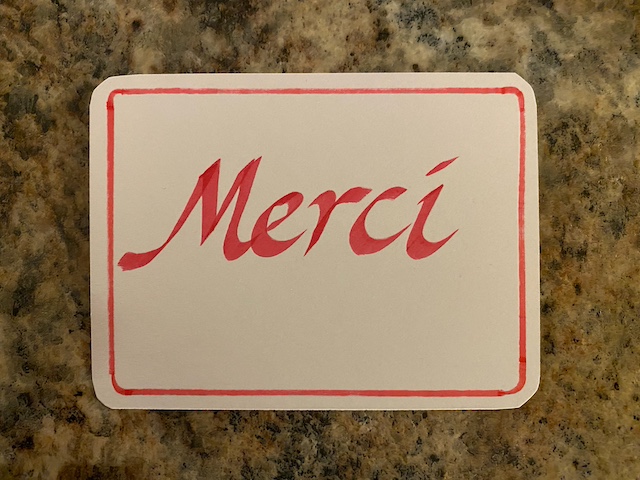
I had a dream recently in which I was making a sign that simply read “Merci” in red letters on a white background. I was on a front porch, nailing the sign to a square pillar coated with old and crackling white paint. It was important for the drivers going by on the road in front of the house to be able to read the sign if they looked to their left.

Merci—the French word for “thank you.” As I began to wake, holding onto the dream, I saw the word on the sign as reading “Mercy.” It turns out that the word mercy does come from the old usage of the French merci. The dreaming mind made connections I hadn’t thought about.

Mercy is the bestowing of a kindness that we have no claim to, that we are in no position to repay. Compassionate treatment when the ordinary terms of justice would allow retribution more harsh—this is mercy. Mercy also names the spiritual reward for bestowing this kind of benevolence on others.

So in the modern-day French acknowledgment of a kindness, “thank you” bears traces of humility. It names gratitude not just for the favor, but for the benevolence of a person who has willingly and generously chosen to bestow unearned kindness in their treatment of us. For their mercy upon us.

I didn’t give much thought to the concept of mercy in my younger years. I didn’t consider myself powerful; I wasn’t in a position to bestow mercy. Kindness, yes. Always. But mercy has a different flavor. And I felt, without ever articulating it, that mercy was needed by those who had done something criminal and were in fear of judgment—a dramatic circumstance that seemed far from my ordinary life.

But life brings wrenching changes that we are powerless to avoid, no matter how fervently we employ our favorite tactics to keep ourselves safe. While we make plans and devote ourselves to the things we think we want, loss makes its way to our door. Its power is beyond our control. We need help getting through the hardest things. “Mercy” is the deeply human cry when life blows open our door.

I recall the voices of my elders as they would respond to shocking news. “Lord have mercy,” they would say. Or in the way of my mother, who utters simply and emphatically, “Mercy!”

Life teaches us the humility and wisdom of asking for mercy. We have immense agency in our lives, but we do not have the power or control we want to believe we have.

Yet the other part of what life teaches us is named in mercy’s alter-ego: merci—thank you. Life has a benevolence that sustains us in every moment. We are carried in ways we forget to notice. Our very breath happens when we are paying attention to other things.

There are many ways to name the life-giving force that sustains all of creation—Love, Spirit, Source, God. May we all remember our connection to this Life Force and to one another, as part of the flow of love and mercy and thanks.

Susan Christerson Brown

Christmas Light

Simplifying the Christmas season most always appeals to me. Dwelling in the quiet expectation of Advent helps make sense of the world. These shortened days demonstrate the rhythm of the seasons and the natural order of things.  It’s a time for paring down in order to focus on what matters most.

But one thing I nonetheless crave this time of year is Christmas lights! . In these weeks marking the longest nights of the year, I welcome the cheer of tiny lights.  Other traditions observe the festival of lights in their own meaningful contexts. Hannukah in the Jewish faith is centered on remembering the miracle of enduring light through the candles of the menorah. Diwali in Indian culture is all about lighting up the night. As the hours of darkness lengthen, the illumination shared by all of these grows ever more significant.

For me, the display of light represents the human effort that is part of the equation of bringing hope and cheer, love and goodness, into the world. The stringing of lights signifies the upwelling of what is best in humanity. Light is a beautiful gift that we share with one other, heartening one another through dark times.

Whether or not we say it aloud, the sharing of light reconnects us to a steady hope in the beauty of life, and reminds us that suffering is not the last word. Light is a powerful mystery, and points to a source beyond our everyday understanding. Even a tiny light helps us remember that we are not alone in the dark.

Yet without a connection to something beyond ourselves the bulbs flicker, the candle flames waver, the power goes out. The world is full of darkness, and we need strength, guidance, and courage from a source more enduring than our changing circumstances if we are to bring light. Part of what we do for one another is to hold this connection for those whose who have lost touch with it.

Cultivating light is like the two movements of the breath: breathing in the fullness of life from the source, and breathing out the manifestation of that love into this world. Jacob’s dream of a ladder connecting heaven and earth, with angels ascending and descending, offers a powerful image for this two-way movement—from earth toward heaven, and from heaven toward earth. Humanity and divinity move toward each other. They meet, and it changes everything.

Something within us is made of light, is a vessel for light, and moves us to bring light into the world. Every glowing bulb echoes this divine spark.

Susan Christerson Brown