Memento from a Retreat

Something within us knows the value of a new perspective. It comes through when we get the sense that it’s time to get away. One person’s restorative weekend might be another’s tedium, but whether it’s a shopping excursion, a sports event, a hike in the woods, a visit to a gallery, a hobby convention, a mission trip, or simply being any place but here, sometimes a change of scenery is exactly what we need.
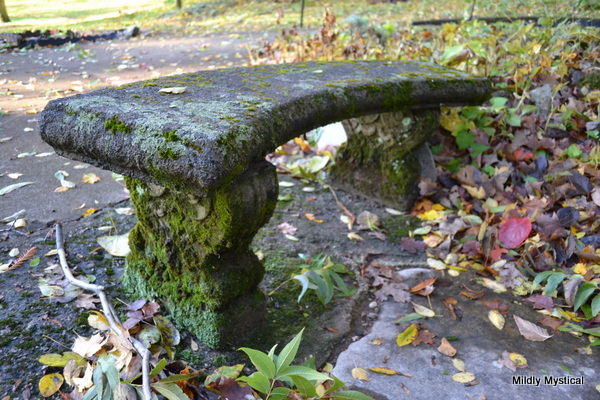
A retreat is another kind of getaway. It isn’t about activities or entertainment, but comes from the desire both to find rest and to be awakened through quiet time in peaceful surroundings away from everyday life.

Recently a friend and I spent a couple of days on retreat at the Sisters of Loretto campus near Bardstown, Kentucky. On my own, I probably wouldn’t have made it happen. Unlike so many other events and commitments, a retreat doesn’t clamor for its place on the calendar. But once we started talking about the idea, we created enough momentum to make a plan and see it through. I’m glad about that, because the effort resulted in a lovely experience that is all too rare.
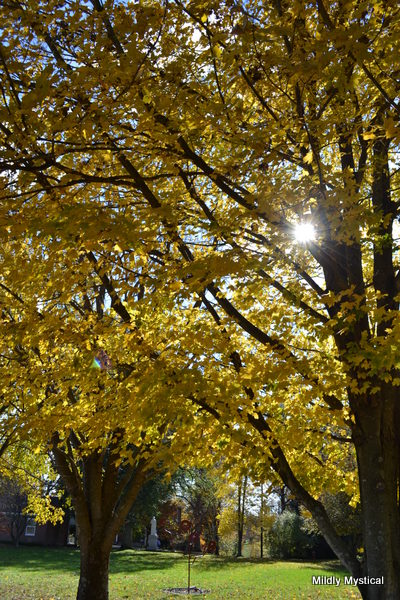
The tricky part of going on retreat is that the mindset that puts it in place—the planning and packing and logistics of getting there—is exactly what needs to be set aside once we arrive. A to-do list pretty much defeats the purpose of relaxing and spending time away from our schedules. So I tried to go without an agenda, and with the idea of listening for whatever it was I needed to hear. But I also tried to be ready for anything. I took books and writing paper, my computer and journal, good walking shoes and my camera, along with the scarf I was knitting. Maybe someday I’ll master the art of traveling light.

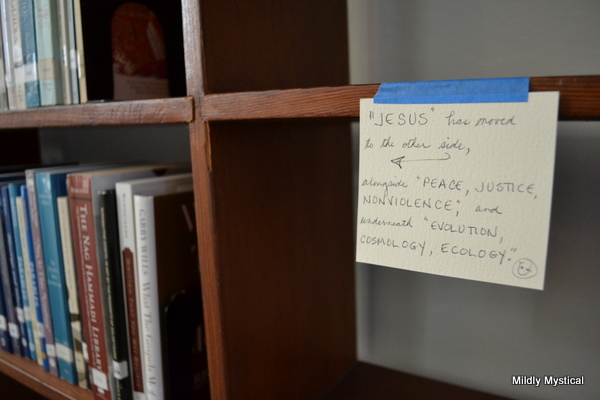
The sisters have a library available to guests, where I found a book by Richard Rohr that turned out to be perfect for reading during my time there. Everything Belongs is a meditation on God’s presence. (Below is a note that one of the sisters left about the rearrangement of their shelves.)
But the ideas I encountered in Rohr’s book found their most eloquent expression after a storm on the first night. Through hours of darkness I had heard the wind tearing through trees and battering the brick and old wood outside my window. Yet the next morning broke chilly and clear. The night seemed almost a bad dream, except that the wind had brought down thousands of pecans from trees all across the grounds. Along the walkway to the guest house, on the path to the pond, among the stations of the cross, around the cemetery, they were everywhere.

“Take some with you,” the sisters urged. And I did. Like a chipmunk stuffing its cheeks, I filled the pockets of my jacket until the fleece could stretch no further. Abundance. Enough for the woman I met, kneeling on the ground, filling her bag as she remembered the shelled pecans that were her grandfather’s gift of love and work at Christmastime. Enough for the two who filled the hood of a third friend’s sweatshirt, worn like a bulging backpack. Enough for others who would stroll the grounds after we left.

Now that I’m back home, the pecans I gathered remind me to breathe and remember that God is present. They remind me of abundance—gifts stumbled upon in the wake of the storm, a harvest to crack open and enjoy through winter days to come.

Abundance in the Ordinary

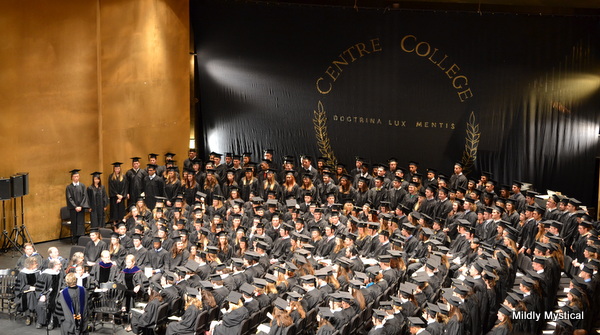
Last weekend was my daughter’s college graduation—a festive, joyous, exhausting two days of observing the rituals, celebrating the accomplishments, savoring the moments, and packing up the contents of her dorm room as she leaves college behind.

In the midst of it all was a baccalaureate service with remarks by Rabbi Joe Rooks Rapport, who also happened to be another proud parent of a graduating senior. One of the things he spoke about in his address was the power of simple events to deeply affect our lives, and how sharing ourselves in ordinary ways can profoundly affect the lives of others.

He spoke on a quiet story from Genesis where Joseph, the dreamer, sent by his father to find his brothers, is wandering through a field on his search. When a man appears and asks where he is going, Joseph describes his task and asks if the man can help. Indeed he does know where the brothers are and directs Joseph to them. It’s not a dramatic story in itself, but it leads to the events on which a nation’s survival depends and a history in which its identity is forged.

This turning of events on such an unremarkable occurrence reminds me of the familiar poem by William Carlos Williams:

So much depends
upon

a red wheel
barrow

glazed with rain
water

beside the white
chickens.

A person’s life can pivot on events that seem small at the time, on a moment as simple as receiving directions, on a tool as humble as a wheel barrow, or even the wheel on which it balances.

The rabbi reminded us that we’re walking around like jigsaw puzzles, with everyone missing some pieces and also holding parts that belong to someone else. These extras usually don’t seem worth much to us, they’re just something we carry around. But when we offer them to the right person their value is extraordinary.

It may not seem life-changing to tell a friend we believe in her when she feels defeated, or to talk to a student about our chosen field, or to offer some direction when we know the way. But we never know what might be the point on which someone else’s life turns. If we pay attention, we might see we’re in a position to help.

Acts of generosity help to heal the world in the only way it can be healed—one heart at a time. So we offer what we have and let the abundance of creation multiply those gifts.

To use a New Testament illustration, each of us carries around loaves and fishes that can go a long way.

Something Old, Something New

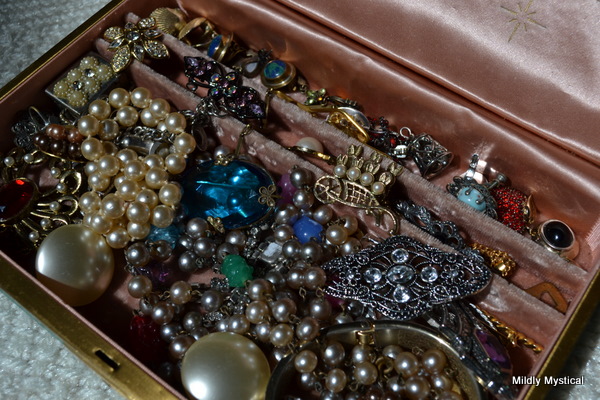
Lately I’ve been perusing local antique markets, flea markets, estate sales, garage sales, and second hand shops, looking at vintage costume jewelry. I’ve been having a great time exploring local places that have been in business for years, but hidden in plain sight from me until the antique bug bit. It’s a whole new world of old things.

The variety of beads and stones, charms and chains, colors and designs, are endlessly compelling. Some connect me to the past, reminding me of a pin I remember my grandmother wearing or beads for playing dress-up from my mother’s jewelry box. A cluster of beads on a clip earring or an elaborate rhinestone brooch evoke another era, while a strand of glowing pearls holds timeless allure.

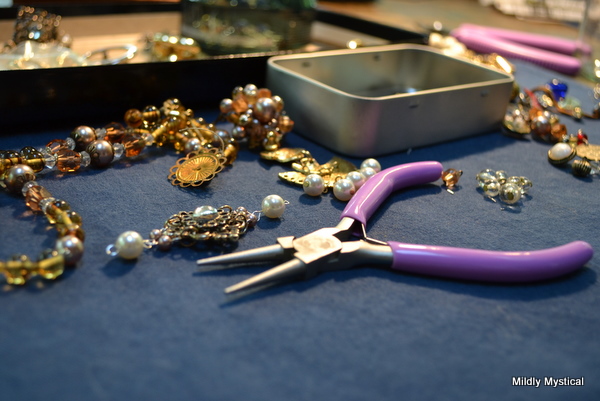
Many of these pieces, separated from the women who once owned and wore them, are too lovely to be abandoned. So I find myself looking for ways to recreate and place them into the stream of life once again. They usually need cleaning up, and sometimes more—beads restrung, stones replaced. Some of the pieces ask to be worn as is, but more often they need re-visioning. The link from a bracelet can become an interesting element on its own, a single earring can be incorporated into a unique necklace, a pin can become part of a pendant. The amazing designs in these old pieces can find new life when they’re separated and combined in new ways. A worthwhile element from the past retains a sense of that era, even as it is fitted to live on in a new context.

One of the things I love about costume jewelry is its accessibility. I would hesitate to alter a valuable piece of jewelry, even if it were something I wouldn’t want to wear in its original state. The sense that what is valuable is untouchable is strong, like the childhood admonition to look but don’t touch. But such items, when they are no longer relevant, tend to be set aside. When objects or designs fall out of favor or use, they’re put away and may or may not be found again. The pieces that remain relevant to the lives we lead are ultimately the ones we’re able to keep track of.

The best of our ideas are like this. Our values, our faith, our commitments are not rarified notions kept apart from everyday life, untouched by our experiences. They are rather the things we take up every day, acquiring the patina of time and use, occasionally refitted to remain relevant to the life we currently live.

Fine jewelry, like a fine idea, enhances life only if we wear it. Those things we actually wear are part of how we’re remembered, and become part of who we are.

What kind of jewelry do you like to wear?


Time Suspended

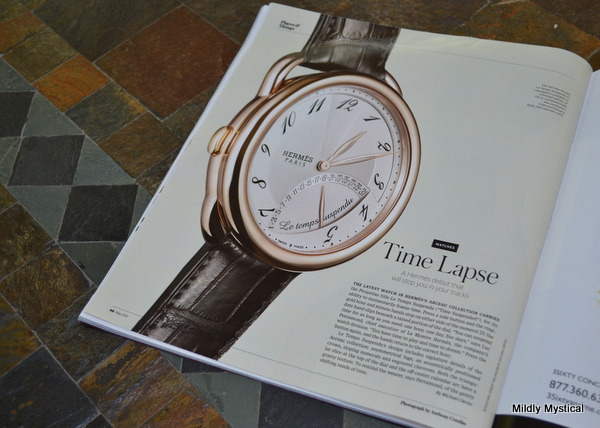
Paging through the WSJ Magazine today, I happened upon this charming piece. It seems that the people at Hermès have been thinking about time and longing, expressed in a limited edition watch design celebrating the company’s 174th anniversary. Part of the Arceau collection, it’s called Le Temps Suspendu, or “Time Suspended.”

The slant of the numerals suggests the ceaseless motion of hours and minutes on the watch face, but these 174 specially made timepieces offer something to counter that momentum. They include a feature designed to evoke the sense of stepping outside of time. Press a button and the hands stop their motion to strike an impossible pose (from a timekeeping perspective), holding the “12” between them. Something like prayer position, perhaps. The date pointer hides away beneath a raised level of the face.

Voilá. If time hasn’t actually stopped, it has at least become irrelevant for the time being, which is much the same thing.

And since the time we can allow for not measuring time is limited, the wearer is reassured that a hidden timekeeper within continues to keep track. Press the button again and the watch returns to the correct time. There’s no mention of an alarm to remind you when to rejoin the scheduled world, but perhaps that would defeat the purpose.

I love the idea of a symbolic act that suspends time, shedding the schedule-driven concerns that clutter the mind and crowd the spirit. We’re at our best when we’re fully present, focusing all our skill and intuition on the thing that engages us. That timeless and exhilarating state is described beautifully by Mihaly Csikszentmihalyi in his book, Flow: The Psychology of Optimal Experience. A ritual that invites that state of mind is invaluable.

When we reach it, time’s movement and measures fall away. The passing of time neither forces nor impedes; we move effortlessly through it. Later, once again inhabiting everyday consciousness, we look around blinking, wondering how long we spent in that heightened state. When was I last aware of the time? What time is it now? How long was time stopped? Only after the fact do we realize that we experienced an escape from time.

For those of us who don’t have $36,200 to spend on a not-watch, or who aren’t among the first 174 people in line to get one, there are more pictures and musings about the watch here. But we’ll need a different ritual for setting aside time.

Simply taking off a watch is one way to have such a ritual. It’s a sign of inhabiting a different mental space, outside of ordinary time. Another way might be to turn off the phones that claim so much of our attention. They’re a door to a wonderful world, but left open all the time they invite too much interruption.

Entering a ritualized process is another possibility: making a cup of tea, digging in a garden, participating in worship, engaging the imagination. We benefit from anything we can do to set aside time in a way that allows us to live well—to enjoy a meal or a conversation, to take a walk, to lose ourselves in something we enjoy, to create something new.

What kind of ritual helps you to suspend time?


Learning to Change My Ways

I recently committed to a three-week experiment in following a vegan diet—a way of eating I had long regarded as extreme. No cheese? No eggs? No milk? Along with no meat? It seemed a lot like no food.

But I was intrigued when my brother, whose favorite meals include Wendy’s double cheeseburgers, said he was trying it. And less than a week later when he said he felt more energetic than in a long while, I ordered the book he had been reading. By the time I had read most of 21-Day Weight Loss Kick Start: Boost Metabolism, Lower Cholesterol, and Dramatically Improve Your Health, by Neal D. Barnard, MD, I decided to give it a try.

To take on that kind of change, even for just three weeks, is a major undertaking. It means learning to cook with strange ingredients from unfamiliar grocery store aisles. It means bringing new lenses to reading a restaurant menu. If nothing else, it’s gratifying to now know I can take on something new and make it work. But more importantly, I feel better for the changes I’ve made.

Given what I had read and heard, I wasn’t entirely surprised by that. The unexpected part of the experience has been the help I received from friends, which was an unanticipated pleasure.

As I first considered this three-week trial, I mentioned to a few people what I was thinking about. Not only were they supportive and interested in how things were going, those with more experience in this way of eating have shared books, recipes, tips, ideas for menus, and a great deal of encouragement. A dear friend even walked with me through the Good Foods Co-op, pointing out some of the items that would help me prepare satisfying meals.

I could not have anticipated the warmth, encouragement, and practical help offered by many different people in my life. Some I knew well, some were acquaintances. But all were eager to talk about the positive results of switching to a plant-based diet. I came home from a conversation at my hairdresser’s with a recipe carefully written by someone glad to offer help in learning a new way to eat. Even the owner of our favorite Chinese restaurant noticed the change when my family ordered all tofu dishes. He was happy to hear about the diet we were trying and urged us to stick with the vegetarian way.

I’m struck by the generosity and goodwill of those who have helped me learn a better way to nourish the body. All the people who care enough to offer their experience and knowledge have made this challenge so much easier. In their help and support for what they have found to be a better way of life, they have offered a kind of hospitality that reminds me of what churches try to cultivate. Change is hard and we all need help when it’s time to make a transformation in our lives, no matter what kind it may be.

This experience will certainly shape the way I eat from now on. It also has me considering how communities naturally arise when people find something so good that it’s worth sharing, and want to help others along the way.

Is there a community that helps you through the transformations that life asks you to make?


Integrating the Elements – Life as Art

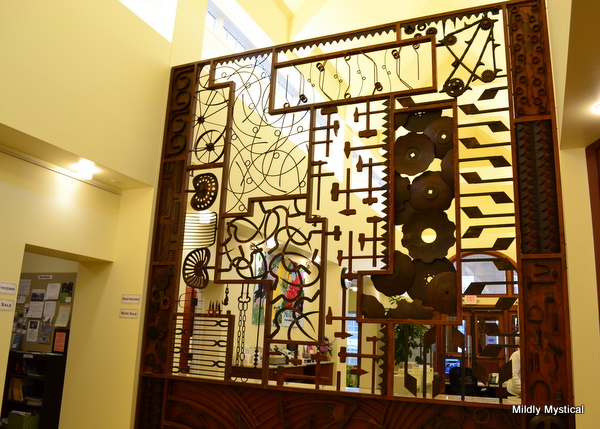
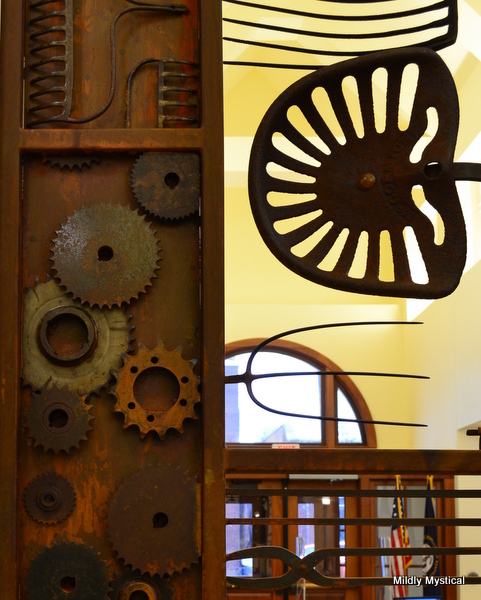
This is the amazing sculptural screen I encountered on a recent visit to the Mercer County Public Library in Harrodsburg. (My friend Mary’s art quilt, Hollyhocks, is on the wall in the background. More pictures and a reflection on the library are at The KaBooM Writers Notebook.)

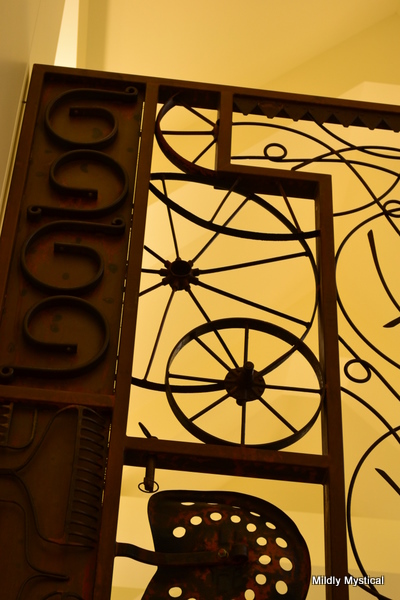
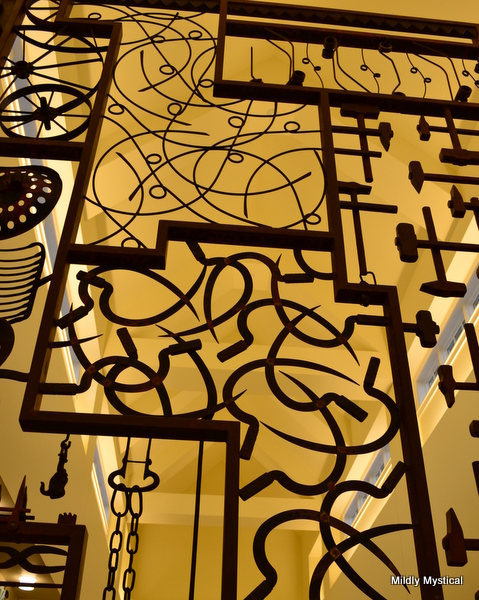
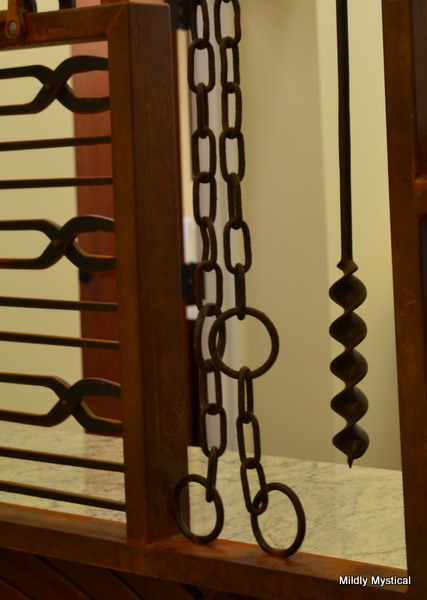
The 15-foot screen, by Erika Strecker and Tony Higdon, takes elements from the rural life of historic Mercer County and makes them into art. Tools were donated by local farm families and incorporated into the work.

The piece is beautiful, dramatic, and also inspiring. To look at this sculpture is to see the disparate elements of a life brought together to make something beautiful. The framework sectioning the screen lends strength and order; the lines, curves, and angles in each contribute life and movement as well as an emphasis on the particular tool or task.

It is a visual teaching about bringing an honored and valued history into a new context, claiming our deep roots and long-held identity while thinking about them in new ways. This piece of art, deeply connected to the place where it is installed, feels like it belongs.

Life challenges us to integrate our toil and dreams, our abilities and needs, our history and future, while living fully in the present. A piece of art that accomplishes such a task, with authenticity and grace, is somehow encouraging.

What helps you see the elements of your life together as a meaningful pattern?


How to Welcome the New Year

I love the fresh start of the New Year. It’s usually a time of introspection for me, a chance to look back at events and changes in the previous year, and to dream and plan for the new one.

Lots of people are doing a great job of sharing their approach to that work this year. Christine Kane lays out a promising technique for using a single word as a beacon for the year. You can find the link to her free download describing the process here. Bradley J. Moore at Shrinking the Camel has a great post on setting goals that spur growth here. If you’re interested in specific, entirely do-able actions to take now to help in reaching goals for the year, Marelisa Fabrega has a wealth of ideas here.

This year I find myself less able to dwell in the dreaming and visioning space that I associate with year’s end. I miss it, but what I’m drawn to instead is the physical task of clearing out all kinds of work spaces throughout the house.

I’ve filed months of papers and notes accumulated from the year’s various projects, tossed old files, taken bags of donations to Goodwill, and I’m about to get to the bottom of a very old pile of ironing. Yes, it’s tedious and exhausting. But it needs to be done and it’s satisfying enough that I keep going.

I do have in mind work I want to accomplish in the coming year. At the very least I’m clearing space to do that work. On another level, I’m purging the clutter that encroaches not only on my house but on my self. Clear space, perhaps, will help with clear thinking. Room to work, perhaps, will make room for action.

So this is another way—a workmanlike way—of preparing to welcome the New Year. Not with resolutions, but with a certain kind of resolve.

Happy New Year!

How is the spirit moving you to greet this New Year?

The Wakefulness of Autumn

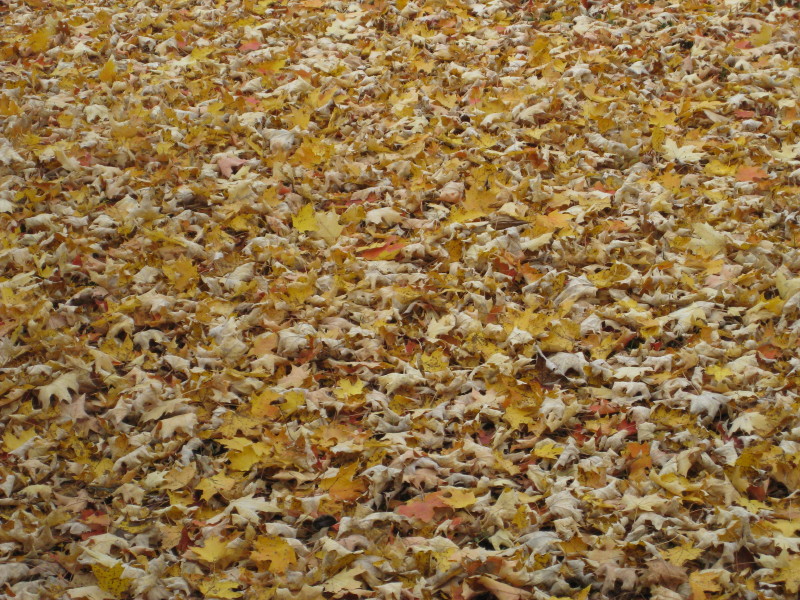
A couple of weeks ago Kentucky sweltered through a summer that had far overstayed its welcome, as a string of 90-plus degree days begun in August disregarded the beginning of fall entirely. Then last week everything changed: I put an extra blanket on the bed, huddled with a cup of tea against damp gray air and wondered how much longer we could get by without turning on the furnace. But now the warm, golden afternoons of the past few glorious days remind me of why October is my favorite month.

There is no lull of sameness to these days. When the world we move through shifts so dramatically, it claims our attention. A changing environment heightens awareness of what’s going on around us. Especially when the haze and humidity of late summer gives way to the bright blue skies of autumn, the shift in seasons is like waking up.

Fall is a gift—a powerful reminder to live wakefully. A lot is happening. I hear it from the raucous crows convening in the tops of the ash trees. I see it in the spiders looking for shelter indoors, the plants going to seed. I feel it in the new wind picking up.

The urgency of the transitions teaches us to notice. And to appreciate. The season’s end offers a sense of the great effort behind its growth. As the energy that infused blossom, fruit, and harvest withdraws, the withered vines mark with startling contrast a place where life has been. It also signals the necessary rest before a new cycle of growth will begin.

The force of life in a growing season is a marvel, and the efforts we make during our own periods of growth can be fairly miraculous, too. Often it is only at the completion of some phase of life that we can take a breath and see how much we’ve accomplished, even as we wonder how we managed to do it. In the thick of things we are rarely able to see how much is happening. Yet something within continues to strengthen us, helping us grow green and supple enough to rise and meet the next challenge, too.

I don’t know how much of the credit is ours for times of growth and moving forward. There are periods I can look back on with a sense of satisfaction at the hard work accomplished. But when I consider those times it’s also with a sense of awe at the life that has moved through me. I feel grateful to have served as a vessel for something good, and I hope it might happen again.

What are you noticing this fall?

The Things that Save Our Lives

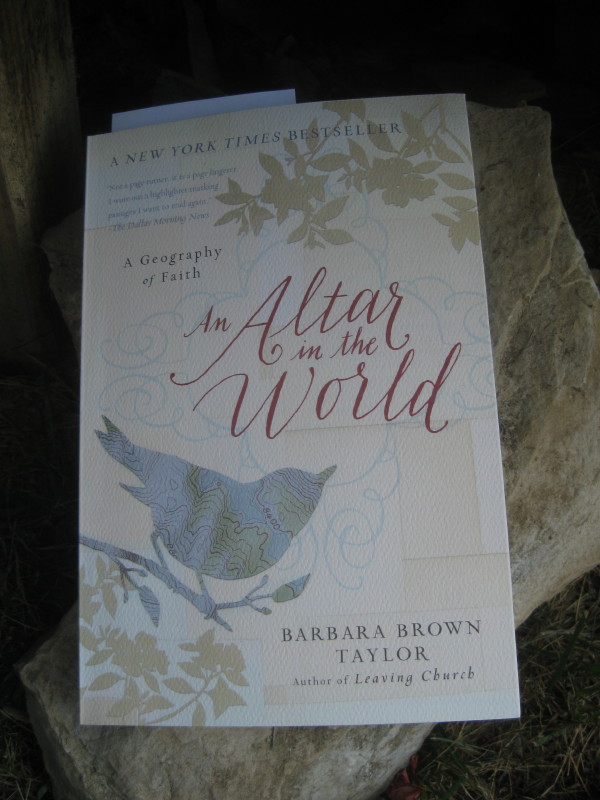
I’ve begun reading Barbara Brown Taylor’s An Altar in the World, a title that speaks to the significance of our embodied lives and our daily experience of the world around us. Her book explores the meaning inherent in our physical existence. The chapters describe ways of inhabiting our bodies and our lives that help answer the spiritual longing for more—“ more meaning, more feeling, more connection, more life.”

“The accumulated insight of those wise about the spiritual life,” she says, “suggests that the reason so many of us cannot see the red X that marks the spot is because we are standing on it.”

The friend who recommended this book called Taylor’s “an earthy spirituality,” and it is exactly that. She rejects the separation of earth and spirit, of body and soul, found in many spiritual writings. She sees that split as more an injection of the history of Western thought than the essence of a life of faith. She makes the point that Christianity at its heart reveres the life of the body through its reverence for the Incarnation. In her words, Christianity takes body and blood very seriously.

Barbara Brown Taylor is an excellent writer and I am finding both pleasure and meaning in her work. I appreciate the way she describes the practices that keep her grounded in the world and, at the same time, connected to the divine.

But the question that keeps prodding me is one she lifts up in her introduction, a question from which her book arises. Asked to speak at a church gathering, she inquired what the priest wanted her to talk about. In his wisdom, he went straight to the heart of life and asked her to “Come tell us what is saving your life now.”

There’s a question. What is so important right now that our lives depend upon it? How do we hold onto what will give life meaning or at least keep us from the pit of despair? Our answers change, but the question remains essential. I’m learning something from how she answers that question, and thinking about how to answer it for myself. I think conversations in which we can share the things that are saving our life are themselves part of what saves us.

For me, the process of learning to see helps. I’m learning to see how the spiritual resonates in the physical world, learning to see patterns in how life unfolds, learning to more clearly see other people. I think that learning to see is a way of learning compassion, as well.

So I would love to hear—What’s saving your life right now?

Clearing Space

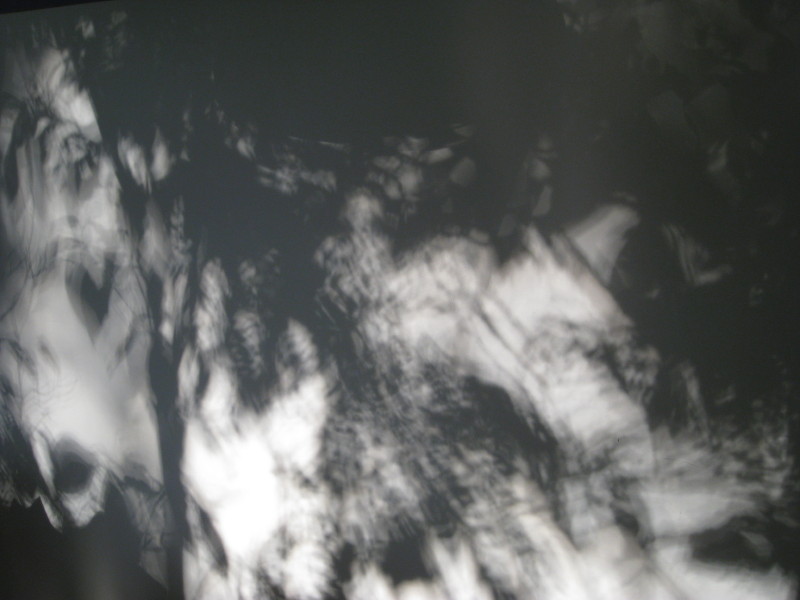
A couple of days ago I noticed some interesting shadows in the evening light. The setting sun cast images of swaying trees and silhouettes of dancing leaves into the house. The most picturesque shadows were on the kitchen wall, below a board full of mementos. I set it up years ago to display children’s art work, but in more recent years it has held newspaper clippings, photos, and memorabilia from their activities. I wanted to get a picture of the light and shadow on the wall, but once I had my camera I realized there was too much clutter in the frame. Posters, newsprint, and a handkerchief hanging from the bottom of the board interfered with getting a good shot, so I quickly removed them before the light changed. I ended up with something kind of interesting:

I’ve been meaning to dismantle that board for over a year. Its role has passed. I’m still proud of my young adult children and their accomplishments, but it’s not about displays. The newspaper is yellowed, the medals are dusty, and the whole thing has been there, unchanged, for so long that no one even sees it any more. But the job I had been putting off—what do I do with all that stuff when I take it down, anyway?—is now underway.

It’s not an insurmountable job to remove the miscellany and open up the wall space, but it does mark the end of an era. Actually, the era has already ended and I’m just now catching up. The board was a simple and effective treatment for an abundance of artwork: a piece of matboard with clothespins glued to it, held on the wall with thumbtacks. It’s still in good shape. If you live nearby and need a way to display your children’s creativity, I’ll be happy to give it to you.

It feels odd to get rid of something that’s been part of the furniture for so many years. On the other hand, it will open up a lot of wall space. There’s something exhilarating about clearing out the old and making room for the new. I’ll enjoy the open space.

I wonder what will go there next.