Everyday Rituals

Lately I’ve been thinking about how a task can be transformed by a sense of ritual. Ritual lends weight to what we’re doing. To clear space in our mind and schedule for a particular task is to acknowledge its importance. It says there is nothing we should be doing instead, and no reason to hurry through this moment on the way to the next thing. That alone is a relief, and all too rare. Ritual invites us to be fully present, to set aside anything else pulling at our attention and focus on the one thing in front of us.
Cooking dinner can be that kind of experience on days when I clear the countertops, turn on “All Things Considered,” and set aside the time to chop, saute, and simmer. Other days it’s a chore I squeeze in between other things, hurrying on to the next thing I need or want to do. The difference is whether I make space around it and become present in doing it. Ritual encourages presence, attention.

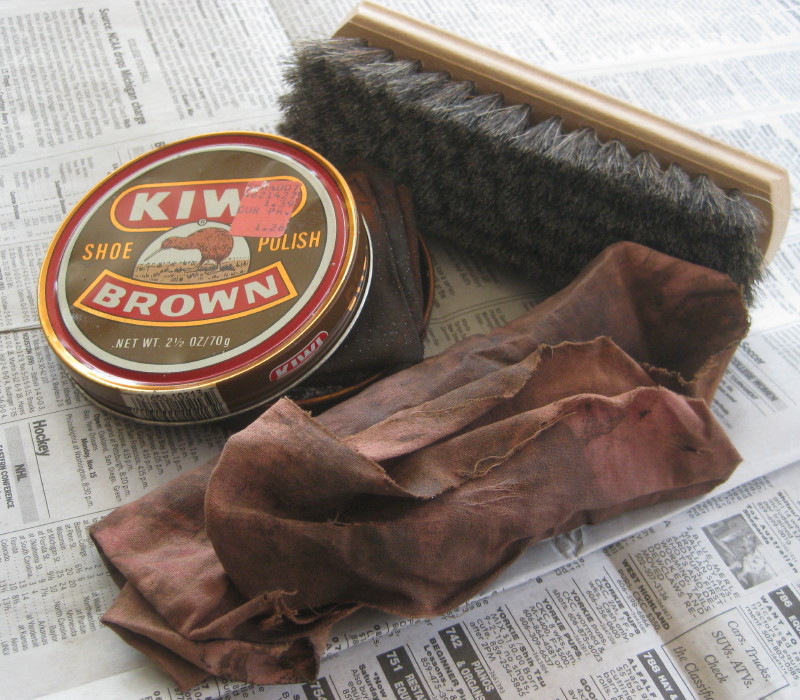
I remember as a child watching my father polish his shoes. He had a box where he kept everything he needed: the round tin of dark polish, the cotton rag saturated with its orange-brown color and oily scent. He would spread a newspaper on the floor to mark his work space, then open a tin and rub the cloth over it in a circular motion. After he worked the polish into the leather he would take up the wide wooden brush with soft black bristles, placing his hand inside the shoe to hold it and brushing with long sweeping strokes until it shone. I can still hear the thump of the brush against the shoe, the whisper of bristles across its polished surface. Then he folded the newspaper and threw it away, carried the box and gleaming shoes back to where they belonged.

I remember my mother preparing to iron, sprinkling clothes with water from a Coke bottle fitted with a metal-capped cork, its rounded surface filled with holes like a salt shaker. There was the muted sparkle and splash of water inside the glass bottle and the dark spots of moisture on cotton. She rolled up the clothes for the dampness to permeate, with an extra sprinkle over the bundle for good measure. With its hiss and rising steam, the transformation of rumpled fabrics into crisp, clean, finished laundry, ironing didn’t look like a chore. It looked like an important part of the week.

As I didn’t have responsibility for doing them, those tasks never appeared to be a burden. Instead they seemed special, meriting the time set aside for them. To a child fascinated by its particular tools, the job was clearly important. It offered elements perhaps of pleasure, but at the very least of satisfaction. I liked ironing handkerchiefs and helping to brush shoes.

I don’t know if my mother and father brought the same attention to their tasks that I brought to watching them. I was free to do something else if I grew bored, while they had to see the job through. And having raised a family myself now, I’m sure they had other things on their mind. Perhaps it’s easier to be mindful about someone else’s work.

Nonetheless, I think that how they went about their work taught me something of value. Ritual creates space around something important. When we turn the pages of a magazine, a few words on a large field of white rivets our attention. In the same way, we can put focus on the most important aspects of our lives by giving them breathing room. We add meaning to our lives when we notice what they contain. We elevate our work when we set it apart through the simple rituals that center us in the moment and ground us in our lives.

What are the tasks that give you satisfaction? Are they enhanced by a ritual of some kind?
The Restorative Power of Deep Attention

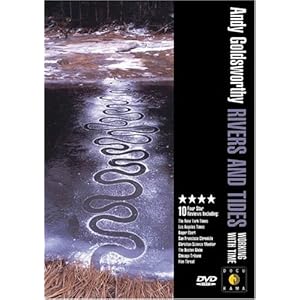
This week I watched “Rivers and Tides,” a wonderful film directed by Thomas Riedelsheimer, about the art of Andy Goldsworthy. Goldsworthy works outdoors, often in the Scottish countryside where he lives. He uses elements from the natural world—leaves, stones, moss, bracken, ice—in surprising ways to create beautiful and powerful forms.

Andy Goldsworthy's Rivers & Tides

Much of his work endures only for a few hours, or even minutes, undone by elements as natural as the materials he uses. He brings to his work the expectation that it will soon yield to water, heat, gravity, wind, growth, decay, and time, incorporating nature’s claim on his creations into the viewer’s experience of the art. His ephemeral art, made of elements yielded by that particular place, are offered back to the landscape. Nature reclaims the elements of his work and once again changes their form. He says of a serpentine line of ice, made from icicle fragments and glowing gold in the rising sun, “The very thing that brings the work to life is the thing that will cause its death,” as the sculpture begins to melt.

In one sequence (you can view a clip here) he uses bleached driftwood to build a beautiful, domed structure with a perfectly round hole in the top, like the oculus of the Pantheon in Rome. He constructs it at a place where river and sea meet, the lines of the rounded walls echoing the swirling motion of the water next to it. As the tide comes in, the water washes up around the dome and lifts a few of the logs at its base. They separate from the structure, encircling it and becoming part of the circular flow mirrored by the lines of the dome. As it yields to the water, the dome becomes an even clearer expression of the motion it is made to suggest.

As Goldsworthy says in the film, “It doesn’t feel at all like destruction.” Eventually it is carried away by that very motion and incorporated into a flow it could only emulate when it was intact. He could be speaking of this circular structure later in the film when he says of another piece, “The sea has taken the work and made more of it than I ever could have hoped.”

Watching this film, I could feel my heartbeat slow, my breathing deepen, my muscles relax. When it ended, I felt the kind of inner quiet and spaciousness that comes after prayer or meditation. A sense of reverence infuses the film. It evokes a sense of wonder and of awe.

Goldsworthy’s rooted presence in the natural world, and his ability to convey it through his work and his words, are a rare gift. He brings deep attention to growth and change in nature, to the details of creation. He knows the characteristics of rocks and leaves, the path of the river, the ebb and flow of the tide. He seems to be exploring how to live in relationship with the overwhelming power of the natural world, finding ways to meet it with his own power as an artist, and working to know the world around him and his place in it.

His work is a reminder that we are part of a miraculous creation, in its enormity and power as well as its specificity and detail. Living with the kind of attention he brings helps us to be present for moments of divine clarity, when life on this earth shimmers with the presence of a reality beyond the one we can know.

What helps foster a sense of reverence in your life?

Working with Stones

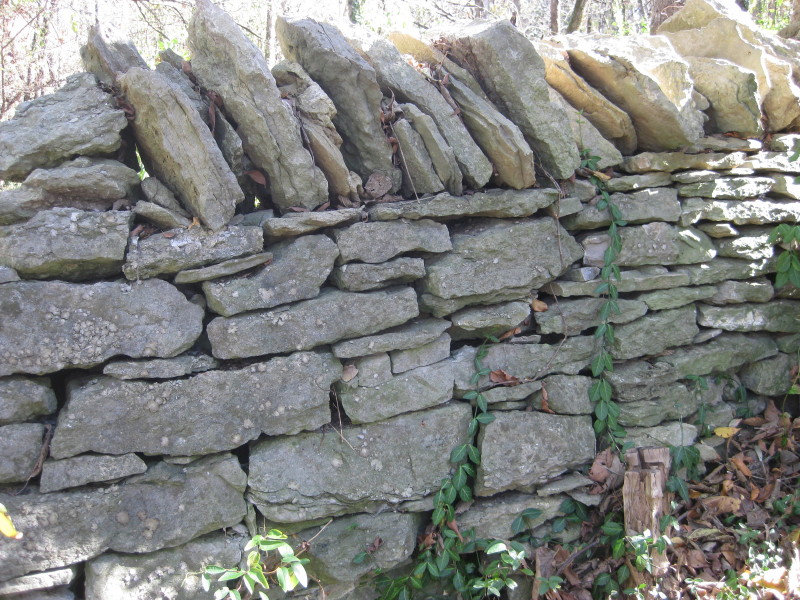
I’m fascinated by the limestone fences that line the Central Kentucky landscape. Constructed without mortar by skilled builders, many of whom were itinerant Irish and Scottish masons, they can endure for centuries. The Dry Stone Masonry Conservancy teaches this almost-lost art to local masons, preserving and spreading the knowledge that allows the old rock fences to be repaired and maintained in the original way, as well as new ones built.

To study a section of stone fence is to appreciate the depth of attention brought to the work. Rough and irregular stones are layered without gaps, as if each settled naturally into its place according to its nature. Even the smallest stone is an integral part of the whole, filling a space that would otherwise weaken the structure. Made of limestone from the surrounding fields, the fences come from the land and fit easily into the landscape. They were built from the necessity of working with materials at hand. They belong.

Labor and skill are apparent in these old stone fences, but so is a sense of reverence for the world as it is. The builders worked with the nature of the stones, so that the textured unity of the fence is not imposed through conformity but coaxed from diversity. The strength and beauty of a rock wall comes from working with what is given, carefully determining the placement of each piece so that is part of a cohesive whole. Nothing is forced; every stone is different. Yet put together in the right way the stones yield a structure that is beautiful, cohesive, and strong. Each stone lends its strength to something that endures.

The building method works because the stones are different shapes. They don’t just sit side by side, they fit into each other. Scattered across the ground, the stones don’t look like building material. They’re just rocks. They suggest nothing of the potential seen by a mason. But placed by a master builder, they become part of something beautiful and enduring.

In the same way, it can be hard to see what the scattered parts of our lives add up to. Sometimes we lack the perspective on our selves, or on our communities, to see anything more than a rocky field. At those times it helps me to remember that I’m not the mason. In spite of everything I try to do and learn and accomplish and create, there is only so much improvement of myself or the world that I can bring about under my own power. But there is a master builder who has the vision to make something good of my life and its odd-shaped elements, and of this world and its rough-edged inhabitants. There is good work in progress.

What helps give you a builder’s perspective?

Return from a Dark Journey

I cannot imagine what the Chilean miners emerging from almost ten weeks trapped underground have been through, and it’s almost unbearable to try. But now they are returning to the world, one at a time, through a long narrow portal that they must travel alone. As some commentators have remarked, they are being reborn.

Alberto Segovia, brother of Dario Segovia, one of 33 miners trapped underground in a copper and gold mine, picks up a rosary as he prays outside the mine in Copiapo

The ingenuity and skill, the expertise and determination, the sheer will and powerful life force driving the rescue efforts are heroic. The images of that first rescue pod reaching the chamber deep underground where the miners waited are a visceral experience. The elemental symbolism in this amazing story holds the archetypal images of life itself, male and female, which have resonated throughout the ages.

Yet even with the images we see from underground, each miner emerges from a mystery. We see the opening of the rescue shaft leading from that dark chamber under the earth, and wonder at where he has been and what he has experienced. He steps out of the Fenix capsule to applause and warm embraces, returning to the life to which he belongs. But surely he is changed.

NASA’s experience in outer space has helped facilitate the care of the miners throughout their confinement, but theirs is an experience of inner space like nothing we’ve known before. The world watches anxiously as each returns, asking if it is possible for yet another man to have made the journey back from such an ordeal. We draw reassurance from every sign that they are intact—physically, mentally, emotionally, spiritually. And we want to share in some part of their journey, to learn from them.

What does it mean to be given life in this world, to be born or reborn? Saints and mystics have sought answers in different ways for centuries. Seekers on vision quests, walkabouts, or spiritual retreats continue to ask for understanding. These Chilean miners may not have sought to make a trek into the darkness within the earth and within themselves, but they have made the journey forced upon them. Reporters tell us that poetry and music, faith and love, have allowed them to endure and help them to sort out their experience.

One of the rescued miners, Mario Sepulveda, said of the experience that it wasn’t a matter of being tested by God, because that’s not how God works. But that life holds difficult experiences, of which this has been the most difficult for him. Yet he was glad it had happened to him, because of how he has been affected by it. “It was a time to make changes,” he said. “I was with God, and I was with the devil. And God won.” He said that it was God’s hand that he took, and that was how he made it through.

What are we learning from the journey we’re sharing with them?

Photo by Ivan Alvarado of Reuters http://www.msnbc.msn.com/id/38587487

The Wakefulness of Autumn

A couple of weeks ago Kentucky sweltered through a summer that had far overstayed its welcome, as a string of 90-plus degree days begun in August disregarded the beginning of fall entirely. Then last week everything changed: I put an extra blanket on the bed, huddled with a cup of tea against damp gray air and wondered how much longer we could get by without turning on the furnace. But now the warm, golden afternoons of the past few glorious days remind me of why October is my favorite month.

There is no lull of sameness to these days. When the world we move through shifts so dramatically, it claims our attention. A changing environment heightens awareness of what’s going on around us. Especially when the haze and humidity of late summer gives way to the bright blue skies of autumn, the shift in seasons is like waking up.

Fall is a gift—a powerful reminder to live wakefully. A lot is happening. I hear it from the raucous crows convening in the tops of the ash trees. I see it in the spiders looking for shelter indoors, the plants going to seed. I feel it in the new wind picking up.

The urgency of the transitions teaches us to notice. And to appreciate. The season’s end offers a sense of the great effort behind its growth. As the energy that infused blossom, fruit, and harvest withdraws, the withered vines mark with startling contrast a place where life has been. It also signals the necessary rest before a new cycle of growth will begin.

The force of life in a growing season is a marvel, and the efforts we make during our own periods of growth can be fairly miraculous, too. Often it is only at the completion of some phase of life that we can take a breath and see how much we’ve accomplished, even as we wonder how we managed to do it. In the thick of things we are rarely able to see how much is happening. Yet something within continues to strengthen us, helping us grow green and supple enough to rise and meet the next challenge, too.

I don’t know how much of the credit is ours for times of growth and moving forward. There are periods I can look back on with a sense of satisfaction at the hard work accomplished. But when I consider those times it’s also with a sense of awe at the life that has moved through me. I feel grateful to have served as a vessel for something good, and I hope it might happen again.

What are you noticing this fall?

What is Religion?

Preparing to teach a college class in religion has me asking the question, What is religion? In the context of a particular faith we can invoke the music, stories, ritual, and symbols that shape its identity, but the general question about the nature of religion is harder to address. What do people have in common when they practice religion?

Scholars trace the word religion to the Latin religare, which means to bind fast or connect, having to do with humans and gods. It contains the same root as ligament or ligature. So we can say that religion binds together the natural world and the realm of the spirit. It also connects those who share the same faith with one another, and it connects the various aspects of an individual’s life within a worldview that helps to make sense of one’s experience.

Inspired by Elizabeth Johnson’s Quest for the Living God, we might say that religion is the practice of bringing our hearts and minds to an attempt to live, along with others, in the awareness of the greater reality. It means concerning ourselves with what is really real. Mircea Eliade, in Patterns in Comparative Religions, also invokes the sense of ultimate reality when he says that “Sacredness is, above all, real.”

Religion is based in the experience of its founders and their encounter with this ultimate reality. It offers a framework for those who follow, helping them to understand and perhaps to experience the divine in a similar way. It also allows a community to grow around that shared understanding and experience.

Whether we view it positively in terms of community or more negatively as an institution, religion is an aspect of the collective. For better or worse, it’s what we do together in an attempt to find meaning.

Yet according to Joseph Campbell in Thou Art That, “Carl Jung says that one of the functions of religion is to protect us against the religious experience. That is because in formal religion, it is all concretized and formulated. But, by its nature, such an experience is one that only you can have. As soon as you classify it with anybody else’s, it loses its character.”Campbell accurately points out the tension between the needs of the individual and those of the group, a tension found not only in formal religion but in any group, from the family to the nation.

In my own experience, I find that religion at its best grows out of spiritual life. The spiritual heart of religion, as I understand it, is the desire to live in relationship with what might be called the Divine. Ideally, everything we do begins with that.

The religious community that I know well is the church, which is made up of all kinds of people at different places in their faith journey. Some of them would agree that spiritual life is the heart of their experience of church, others are mainly focused on the work informed by it. But over time, through discussions and worship experiences, from friendships and shared work, the church offers a place for all people to cultivate richer and more meaningful lives. At its best, and in spite of its worst, the church offers both challenge and encouragement to grow in myriad ways. From what I know of them, this is the way of other faiths as well. Religion can offer a framework in which to shape a life with greater meaning and joy.

What do you understand religion to be?

The Spiritual Practice of Changing the Filter

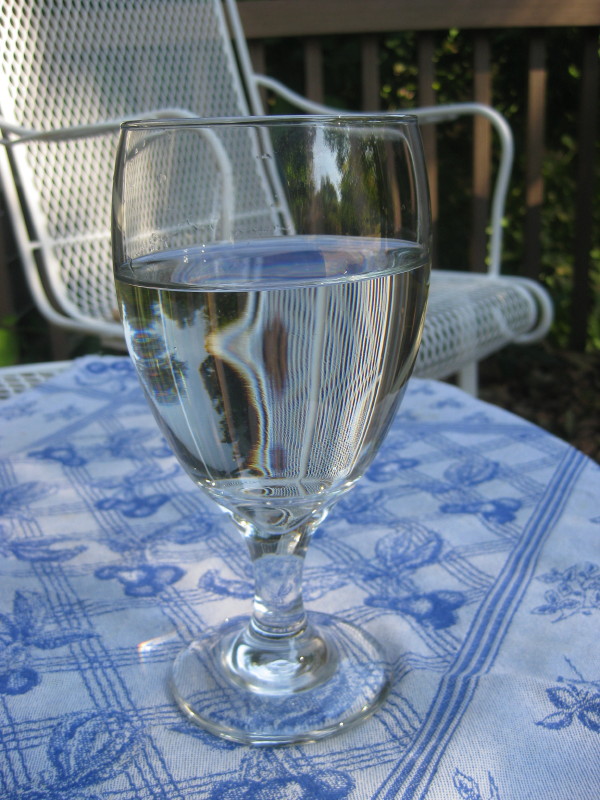
Today I’m drinking a glass of water that tastes much better than the one I had yesterday. Not that I noticed anything wrong with yesterday’s water, but I did notice that it was time to change the filter I use. The difference is dramatic, the taste softer on the tongue—something like cashmere vs. leather.

The water filter works beautifully when it’s fresh. It removes minerals and chemicals, yielding the clear, sweet essence of water. It accomplishes this by absorbing the unwanted elements, but after a time it simply cannot take in any more. The filter’s loss of function is subtle, incremental, and at first it’s hardly noticeable. But eventually the filter stops working, and will actually introduce impurities into the water if it isn’t changed. The water tastes bad.

All of which has me thinking about the psyche’s filters.

Messages, images, and information are everywhere, more than we can ever process. The needs, demands, requests, and unthinking effects of other people’s actions continually challenge our ability to respond. We cannot let everything in; there’s too much. But determining how to filter our experience requires effort.

When the air is thick with frustration and anger, callousness and mindlessness, that’s what we most easily absorb. Without a conscious effort to resist them, negative mindsets permeate our way of being. It’s important to see the world around us as clearly as possible, but to live compassionately requires being careful of what we allow to become part of us.

Yet even when we are mindful about the ways we sort and learn from our experience, eventually the filter becomes too saturated to do its work. The anxiety we encounter begins to color our own emotional life. Thoughts become infused with the taint of fear or resentment in the air around us. It’s time to change the filter.

The upper portion of my Brita pitcher is designed to hold the cylindrical filter securely and allow it to be changed easily. I just lift the lid and drop the new one in. Sometimes I wish I could do that with my mind, but our filters are more complex. It’s through spiritual practice that they become clean again.

The hardest part about cleaning or changing a water filter is remembering to do it. That may be the case with our psyche’s filters as well. The means of restoring spiritual strength and resiliency are as different as people are varied. But we all need our spiritual health to live fully and well. We need the ability to cleanse our thoughts, perceptions, emotions, and motivations. We need a way to experience the pure, sweet essence of life that will nurture and sustain us.

Cleaning the filter might happen through prayer or meditation. It might mean a walk in the woods, yoga, or an exercise routine. It can occur in the experience of music or poetry. It could result from our own means of artistic expression. It may grow out of our relationships or from doing our best work.

Spiritual practice restores us and enhances our ability to take in what we need for health and wholeness. In whatever way we find effective, it’s important to keep up with those practices that cleanse the filter. It changes our way of being in the world, and that changes the world.

What helps you to cleanse the filter?

If you’d like to read more, I’ve posted a reflection on the recent talk by Diane Ackerman as part of the Kentucky Women Writers Conference over at the KaBooM Writers Notebook. It’s called Paying Attention, and offers a look at one way of changing filters by closely observing the natural world.

When a Week Holds Too Much

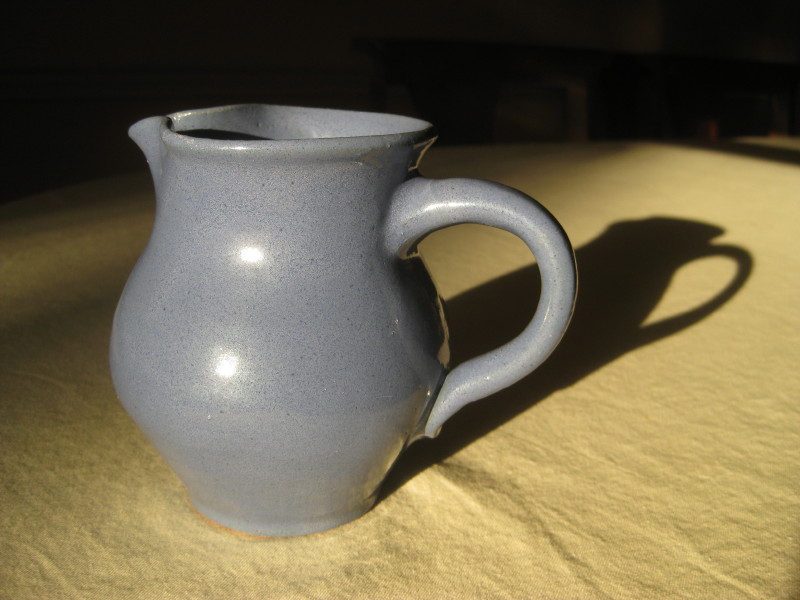
Some weeks I feel like nothing more than clay thrown on the potter’s wheel. Hollowed out by forces beyond my control, I see once again that I am not in charge here. Life presses in, making it clear that I have not reached my final form. The potter is not finished with me.

Yet just as I’ve been pressed and pounded, I’ve also been stretched and shaped. The vessel’s curved sides are taking shape, rising in accord with the potter’s vision in these last few turns of the wheel.

We have a great deal of freedom in what we do with our lives, but we are not in control. Sometimes the best I can do is to be good clay. I can try for the balance of malleability and resistance that allows the formation of a good vessel. I can try to sustain the cohesiveness that allows good clay to hold its form.

The sum of the past several days may feel like more than I can hold—challenge and loss, hope and disappointment, love and sorrow—yet the week has nonetheless brought all of it. So I act as I am able, and respond as I can. I cannot assuage my friend’s grief, but I can offer soup and love. I cannot make the world kind, but I can make laundry clean. I cannot make life easy, but I can be grateful for the ability to work.

I cannot see the future, but I can appreciate the beauty of the world around me. I cannot make my wishes come true, but I can take a risk and reach toward them. I can neither force nor forestall change, but I can accept the love and grace that remain constant.

The wheel keeps turning; a hand I trust remains on the clay. All will be well.

What is the turning wheel bringing to you?

In the Meantime…or Late Summer

August, for me, is the month before things really get started. Heavy with the accumulated heat of the season, it flattens all ambition. Even as the long days grow shorter, with summer slipping away, there is no energy to spare.

My daughter returns to college soon; life is about to change. Soon it will be time to take on new projects, but not quite yet. If there was ever a waiting time to fill, August is it.

What to do in the meantime? Tomatoes ripen faster than we can eat them, the urgent culmination of the season’s growth. The basil desperately tries to go to seed, anticipating the first frost that still seems far away to me. Summer wanes, yet for the moment I’m not ready to move forward.

I’ve been looking around at what needs to be done, giving the attention that’s harder to bring when I’m in the midst of things. I’ve culled cookbooks and recipe files; kept appointments with the vet, the dentist, the rug cleaners; read through magazines I’ve been saving; cleaned out the refrigerator.

In the meantime is valuable in its own way. A time of gathering energy, of clearing a path through the clutter of to-do lists. It’s a particular kind of waiting, like emptying the dishwasher while the tea steeps, or finding a good read while watching for a friend at a bookstore. It’s a way of attending, not “killing” time but filling it.

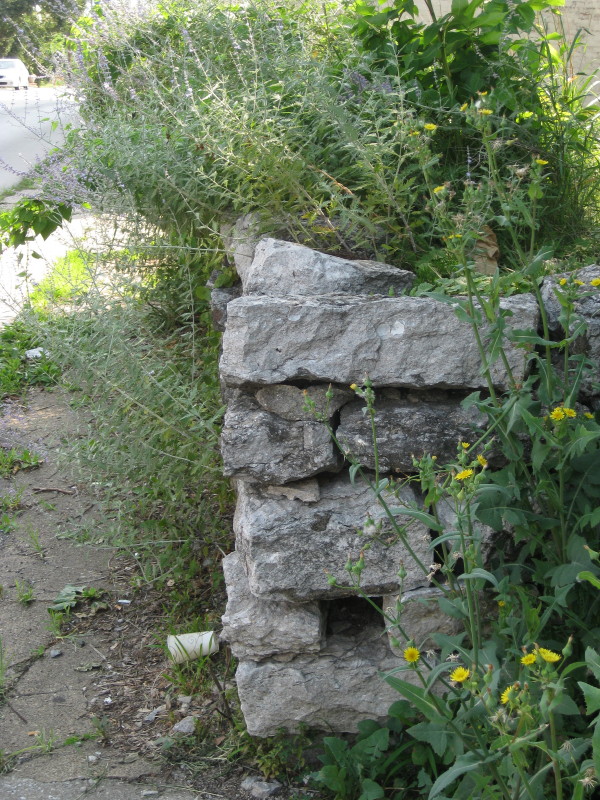
John Lennon reminded us that life is what happens while we’re making other plans. Our goals and hopes and plans are important, but so is the life we live on the way to attaining them, in the meantime. It’s good to remember that, because sometimes life surprises us with what is substantial and what isn’t. The things that look solid as a stone wall can crumble, and what may seem ephemeral as a delicate weed can endure among the rubble.

Soon and suddenly, we’re pulled into the forward momentum of September. It happens so fast I’m in it almost before I see it coming. This year August has cooled down early here, with the autumnal weather bringing a corresponding change of pace for me. Those languid days seem slow, but they pass quickly by. September will soon be upon us.

What do you do in the meantime?

The Things that Save Our Lives

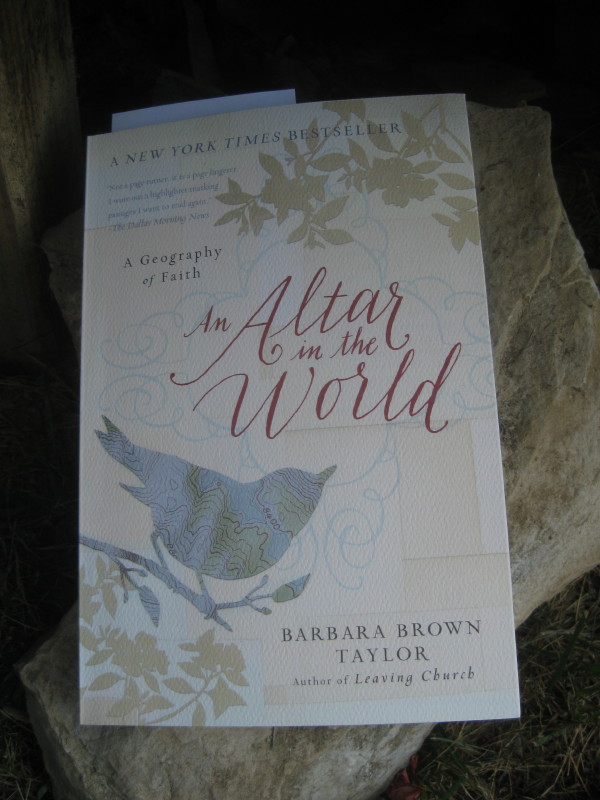
I’ve begun reading Barbara Brown Taylor’s An Altar in the World, a title that speaks to the significance of our embodied lives and our daily experience of the world around us. Her book explores the meaning inherent in our physical existence. The chapters describe ways of inhabiting our bodies and our lives that help answer the spiritual longing for more—“ more meaning, more feeling, more connection, more life.”

“The accumulated insight of those wise about the spiritual life,” she says, “suggests that the reason so many of us cannot see the red X that marks the spot is because we are standing on it.”

The friend who recommended this book called Taylor’s “an earthy spirituality,” and it is exactly that. She rejects the separation of earth and spirit, of body and soul, found in many spiritual writings. She sees that split as more an injection of the history of Western thought than the essence of a life of faith. She makes the point that Christianity at its heart reveres the life of the body through its reverence for the Incarnation. In her words, Christianity takes body and blood very seriously.

Barbara Brown Taylor is an excellent writer and I am finding both pleasure and meaning in her work. I appreciate the way she describes the practices that keep her grounded in the world and, at the same time, connected to the divine.

But the question that keeps prodding me is one she lifts up in her introduction, a question from which her book arises. Asked to speak at a church gathering, she inquired what the priest wanted her to talk about. In his wisdom, he went straight to the heart of life and asked her to “Come tell us what is saving your life now.”

There’s a question. What is so important right now that our lives depend upon it? How do we hold onto what will give life meaning or at least keep us from the pit of despair? Our answers change, but the question remains essential. I’m learning something from how she answers that question, and thinking about how to answer it for myself. I think conversations in which we can share the things that are saving our life are themselves part of what saves us.

For me, the process of learning to see helps. I’m learning to see how the spiritual resonates in the physical world, learning to see patterns in how life unfolds, learning to more clearly see other people. I think that learning to see is a way of learning compassion, as well.

So I would love to hear—What’s saving your life right now?